
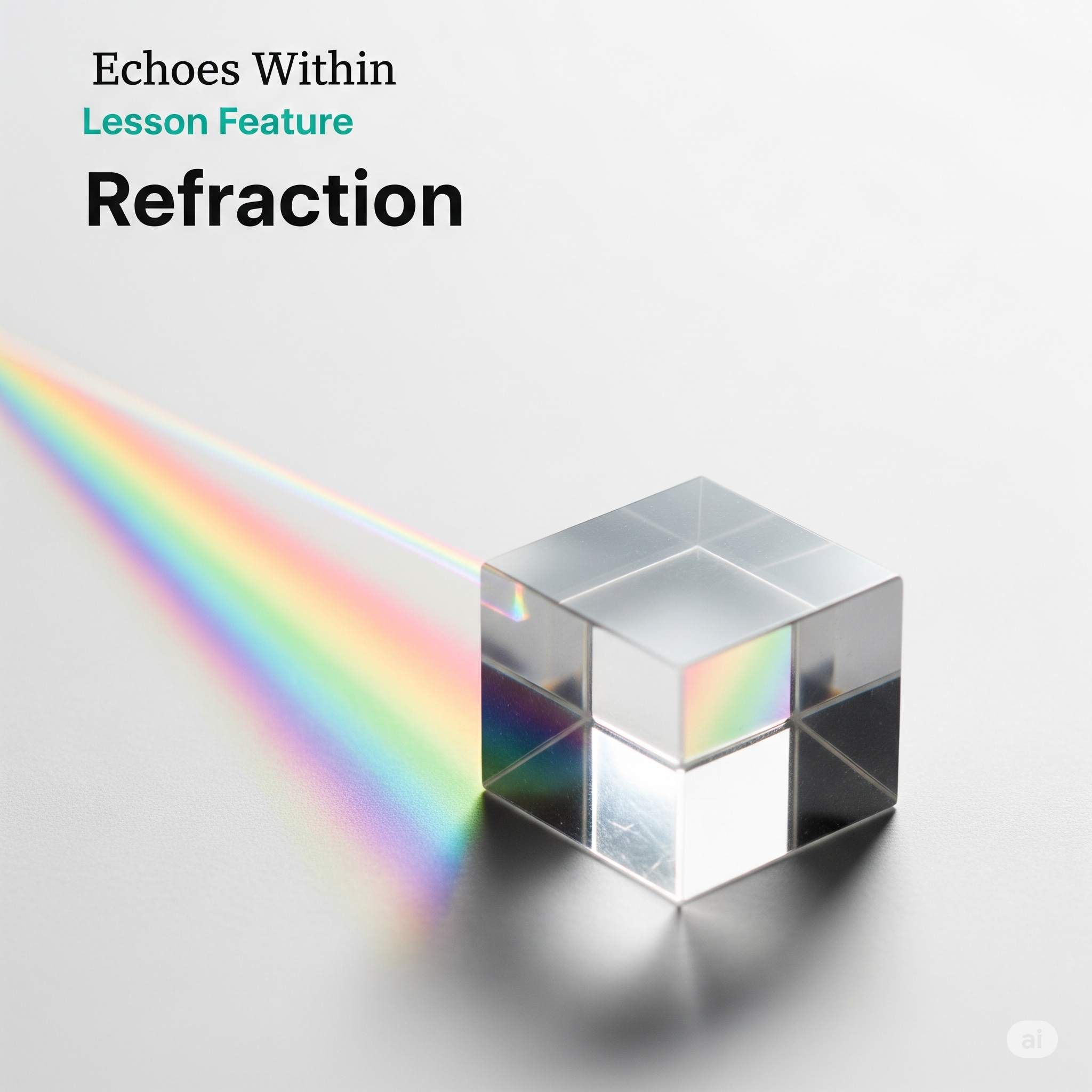
Echoes Within

Echoes Within blog logo – self-reflection, emotional intelligence, and mindful living

Echoes Within

β€œA voice beyond facts β€” where science meets reflection.”

β€œEchoes Within β€” Learning. Thinking. Sharing.”

Course Content
Intro About Course
This **Class 10 Science and Technology** course is tailored for school-level students and strictly follows the official syllabus issued by the [Curriculum Development Centre (CDC) Nepal](https://moest.gov.np/cdc) for the academic year **B.S. 2078**. Aligned with the subject code **SCT.008**, this course ensures that learners grasp key concepts, prepare effectively for exams, and gain practical scientific knowledge. It includes updated topics based on the latest **CDC Nepal curriculum**, making it ideal for students aiming for academic excellence in the **Class 10 board examination**. πŸ‘‰ For a detailed unit-wise breakdown, visit our [Class 10 Science Full Syllabus Page](#) (Replace `#` with the internal page URL) This course is suitable for self-study, school use, or as a revision tool, offering clear explanations, diagrams, and sample questions. Stay ahead in your learning with the most trusted and structured **Class 10 Science and Technology course in Nepal**. Official Syllabus PDF You can download the official syllabus directly from the CDC Nepal website: Download Class 10 Science and Technology Syllabus (PDF) Course Units Overview The Class 10 Science and Technology curriculum is structured into several units, each focusing on different scientific concepts. While the exact unit titles and content may vary, the syllabus typically includes the following areas:
1. Scentific Learning
After comletion of this topic, students will be able to : 1.1 - investigate independent variable, dependent variable, and control variablein scientific research and mention importance of control variable. 1.2 - differetiate between fundamental and derived units. 1.3 - to investigate the fundamental units involved in derived unit. 1.4 - to use the fundamental units in physical equation to examine their homogeneity.
0/7
2. Classification of Living Beings
Upon completion of this topic, the students will be able to : 2.1 -classify plants and animals on the basis of five-kingdom classification system and explain the characteristics of each division (of plants) and phylum (of animals) with examples. 2.2 -classify the subdivision angiosperms upto the class and compare their classes. 2.3 -classify the sub-phylum vertebrata upto the class and compare their classes. 2.4 -describe the relationship between classification of living beings and their evolution.
0/2
3. Honey Bee
Upon completion of this topic, the students will be able to : 3.1 describe the life cycle of a honeybee. 3.2 explain the importance of honeybees.
0/1
Heridity
Heredity is the process by which traits are passed from parents to offspring through genes. It explains why children resemble their parents and why certain diseases or features run in families. After studing this topic (Heridity) students are able to learn and understand about to : -explain about concept and importance of Mitosis and Meiosis Cell Division. - introduce chromosome and gene. -differentiate between DNA and RNA on the basis of structure and function. And to tell Importance of DNA Test in different research. - explain the role of sex chromosome in sex determination of human. - explain Mendel's Laws related to monohybrid cross. -introduce Genetic Technology, and its uses related to research.
0/11
Physiological Structure and Life Process
The human body is a complex system made up of various physiological structures that work together to sustain life. These structures include organs, tissues, and systems like the circulatory, respiratory, digestive, nervous, and excretory systems. Each life processβ€”such as nutrition, respiration, transportation, excretion, growth, reproduction, and response to stimuliβ€”is carried out by specialized organs and systems. These life processes are essential for: Maintaining homeostasis (internal balance), Providing energy, Removing waste, Ensuring survival and reproduction. For example: The digestive system breaks down food for energy, The respiratory system exchanges oxygen and carbon dioxide, The circulatory system transports nutrients and oxygen, The nervous system helps in control and coordination. Together, these physiological structures and life processes form the foundation of biological function, allowing organisms to live, adapt, and interact with their environment.
0/4
Motion and Force
After completion of this topic, the students will be able: - state the universal law of gravitation and solve numericals problems related to it. - define acceleration due to gravity and express its relation to the distance between the surface and center of earth. - introduce gravity and calculate the weight of a body. - introduce the concept of free fall. - describe the effect of air resistance on falling objects and investigate its advantage in daily life.
0/5
Pressure
Upon completion of this topic, the students will be able to: 1.State and demonstrate Pascal's law and investigate its use in daily life. 2.Introduce upthrust in liquid and gas. 3.State and demonstrate Archimedes' principle and investigate its usein daily life.
0/3
Heat
After completion of this topic, the students will be able to: 1.Introduce thermal energy, heat and temperature. 2. Explain the effect of heat on the molecular motion and change in the volume of abody and investigate the importance of anomalous expansion of water. 3. Introduce specific heat capacity of different bodoies and solve simple numerical problems related to it. 4.provide a brief description of the working principles of a laboratory thermometer, a digital clinical thermometer, and a radiation thermometer; and demonstrate the calibration of a thermometer through experimentation.
0/2
Wave
After completion of this topic, the students will be able to: 1. explain the concept of wave refraction and demonstrate the laws of refraction. 2. introduce total internal reflection(TIR) of waves and explain the importance of TIR in sound and light wave applications. 3. demonstrate the dispersion of light and identify its practical applications in daily life. 4. define terms related to lenses and illustrate the laws of refraction by a lens using diagrams. 5. demonstrate the process of forming an image of an object through a lens and describe the features of the resulting image. 6.define optical power and explain the relationship between the lens and curve and its power. 7. describe the process of image formation in the human eye, accompanied by a diagram. 8. describe the types, causes, and correction of vision defects, supported by diagrams. 9. mention the effects of injury to the cornea on vision and introduce problems such as night blindness, cataracts, and colour blindness.
0/6
Electricity and Magnetism
After completion of this topic, the students will be able to: 1. introduce direct current and alternating current. 2. demonstrate and sketch the diagram of the magnetic field formed around a straight wire and a solenoid with an electric current in them. 3. introduce magnetic lines of force and magnetic flux. 4.introduce the motor effect and describe its use in daily life. 5. mention Faraday's law of electromagnetic induction and explain the working process of dynamo and generator based on it. 6. state the structure, working method, and importance of a transformer and solve simple numerical problems based on it.
0/2
Universe
After completion of this topic, the students will be able to: 1. mention the importance of gravitational force in the universe. 2. describe the origin of the universe based on the Big Bang Theory. 3. state the conclusion of Hubbel's study related to the motion of heavenly bodies. 4. write about the future of the universe based on the law of gravitation.
0/2
Information and Communication Technology(ICT)
After completion of this topic, the students will be able to: 13.1. introduce the types of signals and use of the digital signals in our everyday life. 13.2. mention the differences between bit and bytes. 13.3. explain the mecanism of digital signal transmission with examples. 13.4. discuss some responsibilities of netizens, online reputation and digital wellbeing. 13.5. discuss the importance of multimedia in the classroom.
0/3
Classification of Elements
After completion of this topic, the students will be able to: 1. demonstrate the understanding of modern periodic table. 2. describe the interrelation between the elements of certain groups and periods based on their atomic size, electropositivity, electronegativity, valency, and reactivity. 3. explain the classification of elements in the modern periodic table. 4. explain the position of metals, non-metals, and metalloids in the modern periodic table. 5. write the electronic configuration of elements up to the atomic number 20 on the basis of subshell.
0/3
Chemical Reaction
After completion of this topic, the students will be able to: 1. describe the types of chemical reactions with examples. 2.explain and demonstrate experimentally the factors affecting the rate of chemical reactions.
0/3
Gases
After completion of this topic, the students will be able to: 1. describe the methods of preparation of carbon dioxide, and ammonia gases in the laboratory and mention their properties. 2. describe the importance(utility) of carbon dioxide and ammonia. 3. explain the causes, effects, and control measures of acid rain. 4. describe the causes, consequences of greenhouse effects, and explain the measures to minimize the effects.
0/5
Metals and Non-Metals
After completion of this topic, the students will be able to: 1. introduce minerals and ores. 2. tell the name of the main ores of iron, copper, silver, and aluinium. explain the process of extraction of metals from their ores briefly.
0/2
Hydrocarbon and its compounds
After completion of this topic, the students will be able to: 1. introduce hydrocarbon with examples. 2. write IUPAC name, molecular structure and uses of hydrocarbons having carbon atom 1 to 4. 3. differentiate between saturated and unsaturated hydrocarbons. 4. write the types and molecular formulae of alcohol based on the number of hydroxyl group (-OH). 5. investigate the uses of alcohols such as methanol, ethanol, and glycerol.
0/2
Chemicals Used in Daily Life
After completion of this topic, the students will be able to: 1. introduce food preservatives and tell their proper uses. 2. introduce the chemicals used for cleanliness and mention their proper uses. 3. tell the precautions to be taken while storing and using different poisonous chemicals. 4. investigate the industrial chemicals that causes chemical pollution and describe their control measures.
0/3
Class – 10 (Science and Technology)

πŸ”Ή 1. Refraction of Waves and Laws of Refraction

Concept of Refraction

πŸ‘‰ Refraction is the bending of a wave when it passes from one medium to another of different density.
It occurs because the speed of the wave changes as it enters a new medium.

For example:

  • A light ray bends when it travels from air to water.

  • Sound waves bend when they move from warm air to cold air.


Cause of Refraction

When a wave passes from a lighter (rarer) medium to a denser medium, it slows down and bends toward the normal.
When it passes from a denser to a rarer medium, it speeds up and bends away from the normal.


Laws of Refraction

  1. First Law:
    The incident ray, the refracted ray, and the normal all lie in the same plane.

  2. Second Law (Snell’s Law):
    The ratio of the sine of the angle of incidence to the sine of the angle of refraction is constant for the same two media.

    Mathematically,

    sin⁑i/sin⁑r=n

    where nΒ is the refractive index of the second medium with respect to the first.


Demonstration Activity

  • Place a glass slab on a white paper and draw its outline.

  • Shine a ray of light through one side using a pin and observe its path through the glass and out the other side.

  • Measure the angles of incidence and refraction.
    You’ll notice the light bends at the boundary, verifying the laws of refraction.


πŸ”Ή 2. Total Internal Reflection (TIR)

Introduction

When a light ray travels from a denser medium to a rarer medium, and the angle of incidence exceeds a certain critical value, the ray is completely reflected back into the denser medium.
This phenomenon is called Total Internal Reflection (TIR).


Conditions for TIR

  1. The ray must travel from a denser to a rarer medium.

  2. The angle of incidence must be greater than the critical angle.


Applications and Importance of TIR

  • Optical Fibres: Used in communication systems to transmit data as light signals.

  • Periscopes & Binoculars: Use prisms for total internal reflection to observe distant objects.

  • Diamond Sparkle: Light undergoes multiple total reflections inside a diamond, making it shine brilliantly.

  • Mirage Formation: In hot deserts, layers of air with different densities cause TIR, forming an illusion of water.


πŸ”Ή 3. Dispersion of Light

Definition

πŸ‘‰ Dispersion is the splitting of white light into its seven constituent colours (VIBGYOR) when it passes through a glass prism.

Each colour bends by a different amount because each has a different wavelength.

  • Violet bends the most,

  • Red bends the least.


Demonstration of Dispersion

  • Pass a beam of white light through a glass prism in a dark room.

  • A beautiful spectrum of colours (Violet, Indigo, Blue, Green, Yellow, Orange, Red) appears on the screen.

This experiment was first demonstrated by Sir Isaac Newton.


Practical Applications of Dispersion

  1. Formation of a Rainbow – Caused by dispersion, reflection, and refraction of sunlight in water droplets.

  2. Spectroscopy – Used to study the composition of light from stars and other sources.

  3. Optical Instruments – Helps in designing lenses to minimise colour distortion (chromatic aberration).

  4. CDs and Soap Bubbles – Show colourful patterns due to dispersion and interference of light.


βœ… Conclusion

Refraction, Total Internal Reflection, and Dispersion are key wave phenomena that explain how light and sound interact with matter.
These principles are the foundation of many modern technologies such as fiber optics, optical devices, cameras, telescopes, and communication systems.