
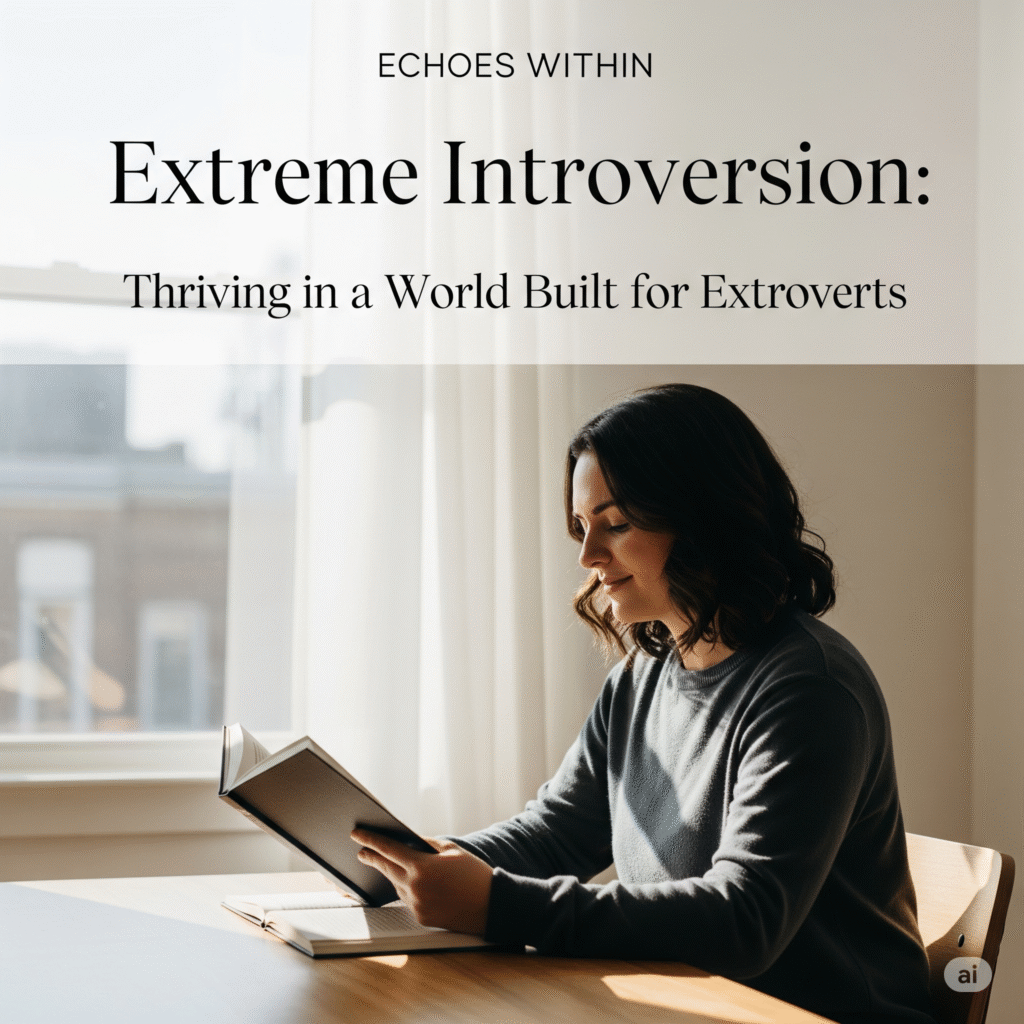
Extreme Introversion
Extreme introversion can feel like a silent struggle in a society that celebrates small talk, group dynamics, and nonstop stimulation.
When Quiet Becomes a Superpower
In today’s fast-paced, hyper-social world, silence is often mistaken for weakness. We reward charisma, small talk, and networking while overlooking the quiet strengths of introverts. For those with extreme introversion, the pressure to perform socially can feel overwhelming.
But what if being deeply introverted isn’t a disadvantage, but a different kind of strength? More people are realising that introverts don’t just survive in an extroverted world—they can truly thrive, once they understand how to work with their nature instead of against it.
What Is Extreme Introversion?
Introversion exists on a spectrum. While many people identify as “introverts,” extreme introverts experience it more intensely. They may:
Prefer solitude almost always
Avoid social interactions unless necessary
Feel drained quickly by even brief socialising
Need extended downtime after stimulation
Think deeply but speak sparingly
Unlike shyness or social anxiety, introversion is not fear but preference. Extreme introverts simply gain energy from being alone, not from being with people.
Why the World Favours Extroverts
Modern society celebrates extroversion. Schools encourage constant group work. Offices promote open-plan layouts and brainstorming sessions. Even dating, networking, and friendship often hinge on being outgoing.
Consequently, introverts may feel overlooked, misjudged, or forced to “fake” extroversion to fit in. This leads to stress, burnout, and loss of authenticity.
However, the tide is slowly turning. Thanks to growing awareness and the rise of remote work, more spaces are recognising the value of quiet minds and deep thinkers.
How Extreme Introverts Can Thrive
Thriving as an extreme introvert isn’t about changing your nature—it’s about honouring it. Here are several ways to embrace your personality and succeed on your own terms:
1. Create Space for Solitude
Schedule alone time just like meetings or deadlines. Protect it fiercely. This isn’t indulgence—it’s maintenance. Your energy depends on it.
2. Choose Deep Over Broad Connections
Instead of trying to network with everyone, focus on building a few strong, meaningful relationships. You’ll feel more fulfilled and less exhausted.
3. Work in Environments That Suit You
If possible, seek remote or quiet workspaces. If you’re in a noisy office, use noise-cancelling headphones or block time for solo work. Advocate for your needs respectfully but clearly.
4. Set Boundaries Without Guilt
Say “no” to social events when needed. Explain kindly but firmly. People who respect you will understand, and those who don’t aren’t your responsibility.
5. Leverage Your Strengths
Introverts often excel at focus, creativity, empathy, and thoughtful communication. Use these to your advantage in writing, research, mentoring, or strategy-based roles.
6. Practice “Social Recovery”
After any intense interaction or event, permit yourself to recharge. That’s not weakness—it’s wisdom.
Changing the Narrative Around Introversion
Thankfully, the cultural narrative is shifting. Books like Quiet by Susan Cain and platforms like introvert-positive blogs and podcasts are giving voice to those who once felt invisible.
More companies are realising that innovation doesn’t always shout. Often, it whispers. And introverts bring depth, clarity, and calm in a world often full of noise.
Conclusion: Quiet Doesn’t Mean Less
Extreme introversion isn’t a flaw. It’s a trait—just as natural as extroversion. You don’t have to be the loudest in the room to be heard, or the most outgoing to be impactful.
Instead of trying to fit into the extrovert mould, shape your own world—one that supports your energy, amplifies your strengths, and lets your quiet brilliance shine.
📣 Call to Action (CTA)
💬 Are you an extreme introvert—or do you know someone who is?
How do you navigate a world that often rewards the loudest voice?Share your experience in the comments or tag a friend who needs this reminder: quiet minds are powerful too.
👉 For more inspiration on mental wellness, self-awareness, and thriving as your true self, subscribe to our newsletter today!
📚 References for Further Reading:
We Are Losing Creativity in the Search for Perfection
The Pursuit of Perfectionism: When Good Enough Isn’t Enough
The Sedentary Lifestyle Epidemic: How Sitting Is Killing Us Slowly
The Psychology of Procrastination: Why We Self-Sabotage
The End of Privacy: How Our Digital Lives Are Changing Human Behaviour
BBC Worklife – “The Extrovert Ideal: How Western Culture is Biased Against Introverts”
https://www.bbc.com/worklife/article/20200113-how-western-culture-is-biased-against-introverts
APA (American Psychological Association) – “What is Introversion?”
https://www.apa.org/news/press/releases/stress/2017/introversion
Pingback: SEE Result 2081: Career Possibilities & Future Uncertainty
Pingback: How to Choose the Right Stream After SEE in Nepal
I don’t think the title of your article matches the content lol. Just kidding, mainly because I had some doubts after reading the article. https://www.binance.com/ka-GE/register?ref=ILE8IH9H
I don’t think the title of your article matches the content lol. Just kidding, mainly because I had some doubts after reading the article. https://accounts.binance.info/cs/register-person?ref=OMM3XK51
Your point of view caught my eye and was very interesting. Thanks. I have a question for you.