
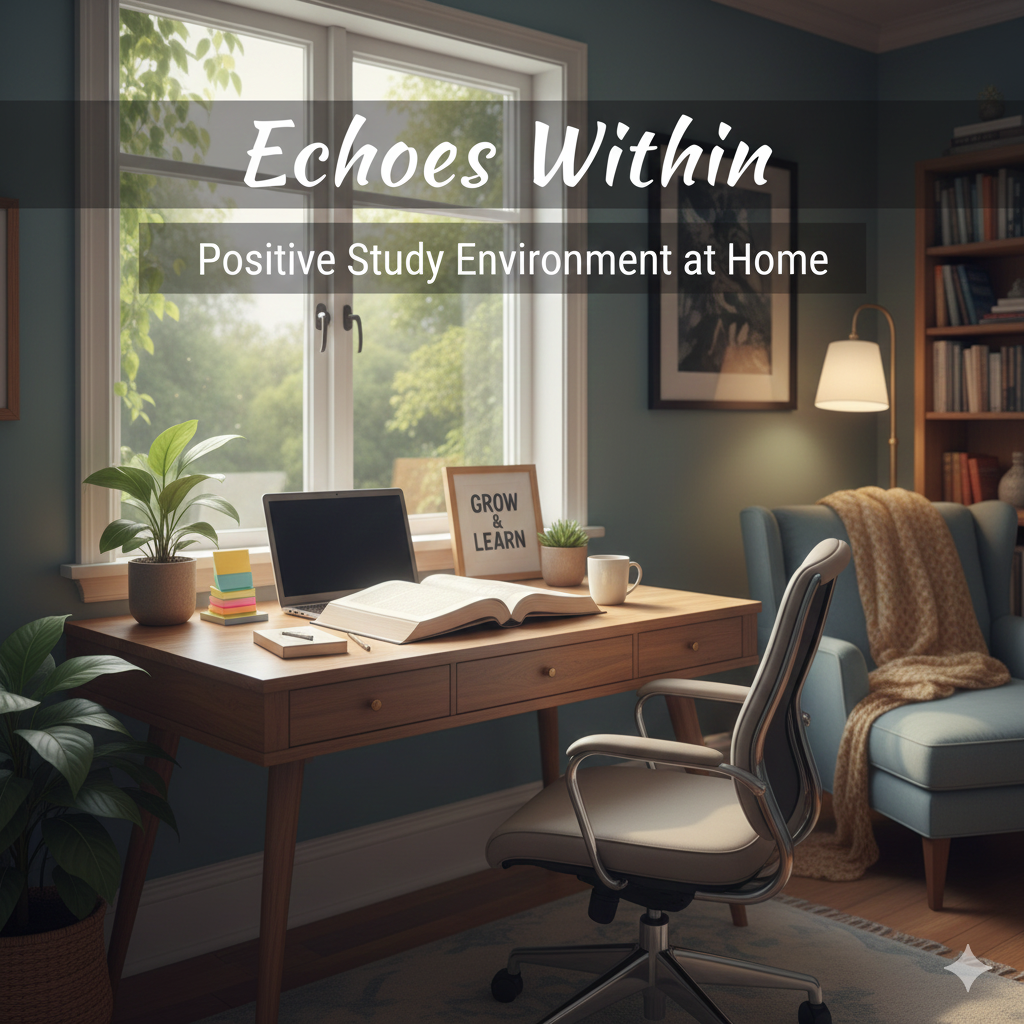
🏡 Introduction: Why a Study Environment Matters
Many parents and students believe that studying longer hours automatically leads to better results. However, research and experience show that where and how a student studies matter more than how long they study.
Therefore, building a positive study environment at home is not a luxury—it is a necessity. A supportive environment helps students stay focused, reduces stress, and improves understanding. Moreover, it builds discipline and consistency over time.
🧠 What Is a Study Environment?
A study environment is not just a table and chair. Instead, it includes:
physical space
emotional atmosphere
daily routine
parental support
mental peace
When all these elements work together, learning becomes easier and more effective.
🪑 Step 1: Create a Dedicated Study Space
First of all, students need a fixed place to study.
Why this matters:
The brain associates the space with learning
distractions reduce automatically
Discipline develops naturally
Tips:
Choose a quiet corner
Use a comfortable table and chair
Keep the space clean and organised
Avoid studying in bed
As a result, focus improves significantly.
🔇 Step 2: Reduce Distractions Gradually
Next, remove common distractions that disturb concentration.
Common distractions:
mobile phones
television noise
frequent interruptions
loud conversations
What helps:
Keep your phone away during study time
inform family members about study hours
Use a noise-free or soft instrumental background if needed
Consequently, the student’s attention span increases.
💡 Step 3: Ensure Proper Light and Ventilation
Additionally, physical comfort plays an important role in learning.
Use natural light during the day
Use a desk lamp at night
Ensure proper airflow
Maintain a comfortable room temperature
When the body feels comfortable, the mind focuses better.
⏰ Step 4: Build a Consistent Study Routine
However, a good environment alone is not enough without routine.
Why routine matters:
reduces procrastination
builds habit
lowers exam stress
Simple routine idea:
Fixed study time daily
short breaks after 30–45 minutes
time for revision and relaxation
Over time, studying becomes automatic rather than forced.
👨👩👧 Step 5: Create a Positive Emotional Atmosphere
Most importantly, emotional safety at home strongly affects learning.
Parents should:
Avoid shouting or scolding during study time
encourage effort, not just marks
Listen to the child’s difficulties
avoid constant comparison
When students feel supported, they study with confidence instead of fear.
📚 Step 6: Keep Study Materials Ready
Furthermore, an organised study area saves time and energy.
Keep textbooks, notebooks, and pens ready
avoid searching for materials during study
Use a simple timetable or checklist
As a result, learning becomes smoother and less stressful.
🌱 Step 7: Balance Study with Rest and Recreation
Equally important, rest is part of effective study.
allow short breaks
ensure proper sleep
Encourage light physical activity
Reduce screen time before bed
A rested mind learns faster and remembers longer.
🎯 Common Mistakes to Avoid
Despite good intentions, many homes make these mistakes:
forcing long study hours
studying only before exams
using fear as motivation
interrupting frequently
focusing only on results
Instead, focus on process and consistency.
🌟 Conclusion: Small Changes, Big Results
In conclusion, building a study environment at home does not require expensive furniture or strict rules. Rather, it requires understanding, consistency, and emotional support.
When the home becomes a place of calm learning rather than pressure, students naturally develop:
discipline
curiosity
confidence
love for learning
Ultimately, a supportive study environment at home lays the foundation for lifelong success.
📣 Call to Action
If you found this article helpful, share it with parents, teachers, and students.
Together, we can make home a place where learning feels safe, focused, and meaningful.
📚 You Can Also Read:
- Why Many Students Come to School but Are Not Interested in Studying: The Hidden Psychology Behind Classroom Silence
- Is Learning Science Just Memorising? Or Transforming a Student’s Life Scientifically?
- How Negative and Deceiving People Disturb Our Peace: Protecting Your Calm Mind in a Toxic World
- Top Time Management Lessons Every Student Should Learn Early – Inspired by Nepalese Heroes
Pingback: Are Parents Ruining Children’s Character by Controlling Choices?