
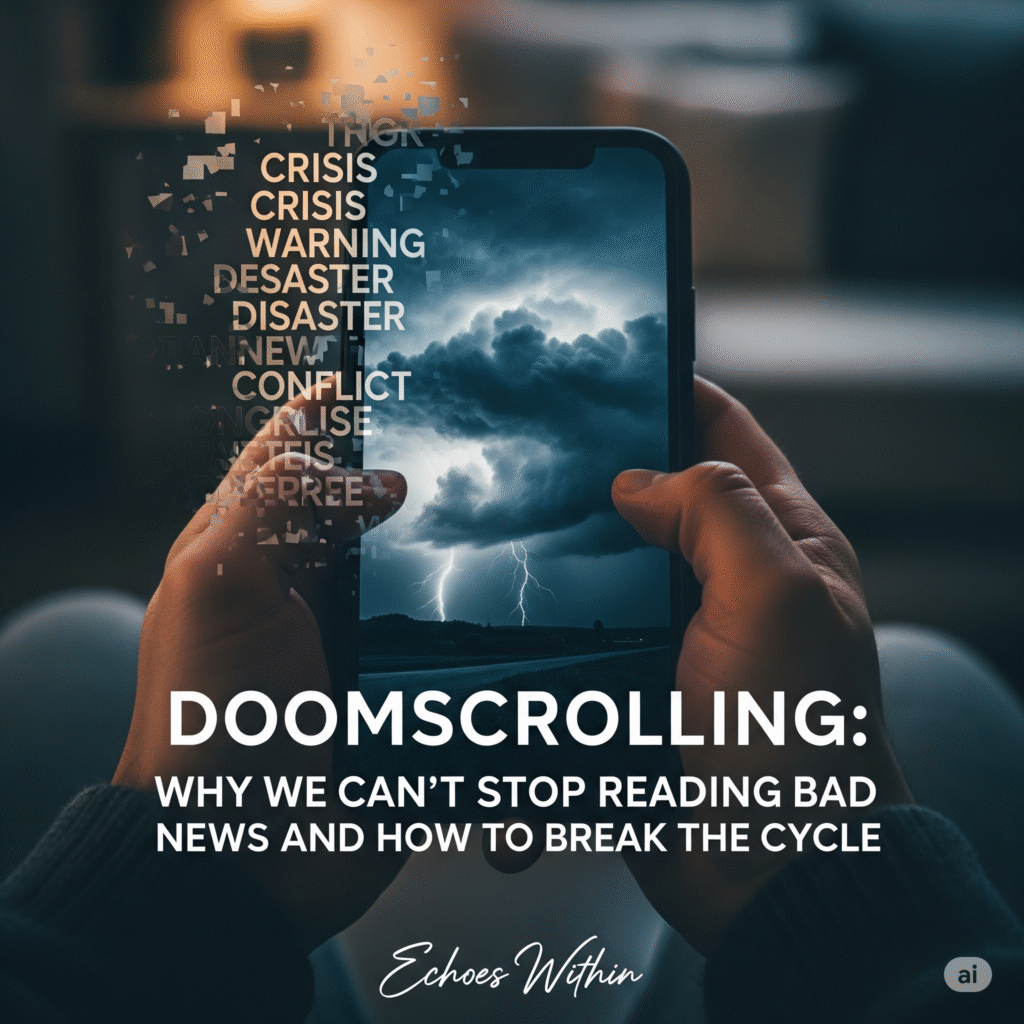
Doomscrolling: The Psychology Behind Our Addiction to Bad News
It’s late at night. You open your phone just to check the news—and suddenly an hour has passed, filled with headlines about disasters, crises, and conflict. This behaviour, known as doomscrolling, feels compulsive and exhausting, yet strangely hard to stop.
Why are we so drawn to bad news, even when it leaves us anxious and drained? The answer lies in human psychology—and once you understand it, you can break free from the cycle.
Why We’re Wired for Doomscrolling
Humans evolved with a survival instinct that prioritises threats. Psychologists call this the negativity bias—our brains are more sensitive to danger than to neutral or positive events.
In the digital age, this bias translates into a strong pull toward alarming headlines. Social media algorithms amplify this effect, feeding us more of what keeps us engaged—often negative or emotionally charged stories.
The Hidden Costs of Doomscrolling
While staying informed is valuable, constant exposure to bad news comes with emotional side effects:
Heightened anxiety and stress
Sleep disruption
Feelings of helplessness or hopelessness
Reduced focus and productivity
Over time, doomscrolling doesn’t just affect your mood—it impacts your mental health and overall well-being.
Step One: Recognise the Pattern
The first step to breaking free is awareness. Notice when you reach for your phone and how often it leads to negative news consumption. Awareness creates space for intentional change.
Step Two: Set Boundaries on News Consumption
Limit your news intake to specific times of day and trusted sources. Turn off non-essential notifications and resist checking the news first thing in the morning or right before bed.
Step Three: Replace the Habit with Something Restorative
When you feel the urge to scroll, redirect that energy toward activities that uplift or ground you—reading a book, going for a walk, or practising mindfulness. These positive habits weaken the doomscrolling reflex over time.
Step Four: Curate Your Information Diet
Follow accounts and outlets that provide balanced coverage, solutions, or uplifting stories. Balance awareness of the world’s problems with exposure to stories of progress and resilience.
Breaking the Cycle
Doomscrolling feeds on fear, but fear loses its grip when we take control of how we engage with information. By setting boundaries, choosing balance, and practising intentional media use, you can protect your mental health without disconnecting from the world.
Key Takeaway:
Staying informed doesn’t require constant exposure to negativity. With mindful habits, you can stay aware, reduce stress, and reclaim your peace of mind.
Reference Link:
The Silent Killer: How Resentment Slowly Destroys Relationships
The Science of Flow State: Unlock Peak Productivity and Creativity
American Psychological Association – Why We Doomscroll and How to Stop
Your point of view caught my eye and was very interesting. Thanks. I have a question for you. https://www.binance.info/register?ref=IXBIAFVY
Your article helped me a lot, is there any more related content? Thanks!
Your point of view caught my eye and was very interesting. Thanks. I have a question for you.
Can you be more specific about the content of your article? After reading it, I still have some doubts. Hope you can help me. https://www.binance.com/register?ref=JW3W4Y3A