
On completion of this lesson, the students will be able to state and demonstrate Pascal’s law and investigate its use in daily life.
🔹 Statement of Pascal’s Law
Pascal’s law states that:
👉 “When pressure is applied at any point to a confined liquid, it is transmitted equally and undiminished in all directions throughout the liquid.”
This means that the pressure exerted on a fluid in a closed container is distributed equally to every part of the liquid and to the walls of the container.
🔹 Demonstration of Pascal’s Law
Take a closed vessel filled with water.
Make several small holes at the same level in the wall of the vessel.
When pressure is applied to the water (for example, by pushing a piston or pressing from the top), water comes out of all holes with the same force and pressure.
This proves that pressure is transmitted equally in all directions.
🔹 Mathematical Expression
If pressure PP is applied to a liquid, then the same pressure is experienced at every point:
P=FAP = \frac{F}{A}
Where,
PP = Pressure
FF = Force applied
AA = Area
🔹 Applications of Pascal’s Law in Daily Life
Pascal’s principle is widely used in hydraulic machines.
Hydraulic Press – Used to compress cotton, shape metals, and extract oil.

Hydraulic Lift – Used in workshops and elevators to lift cars and heavy loads.
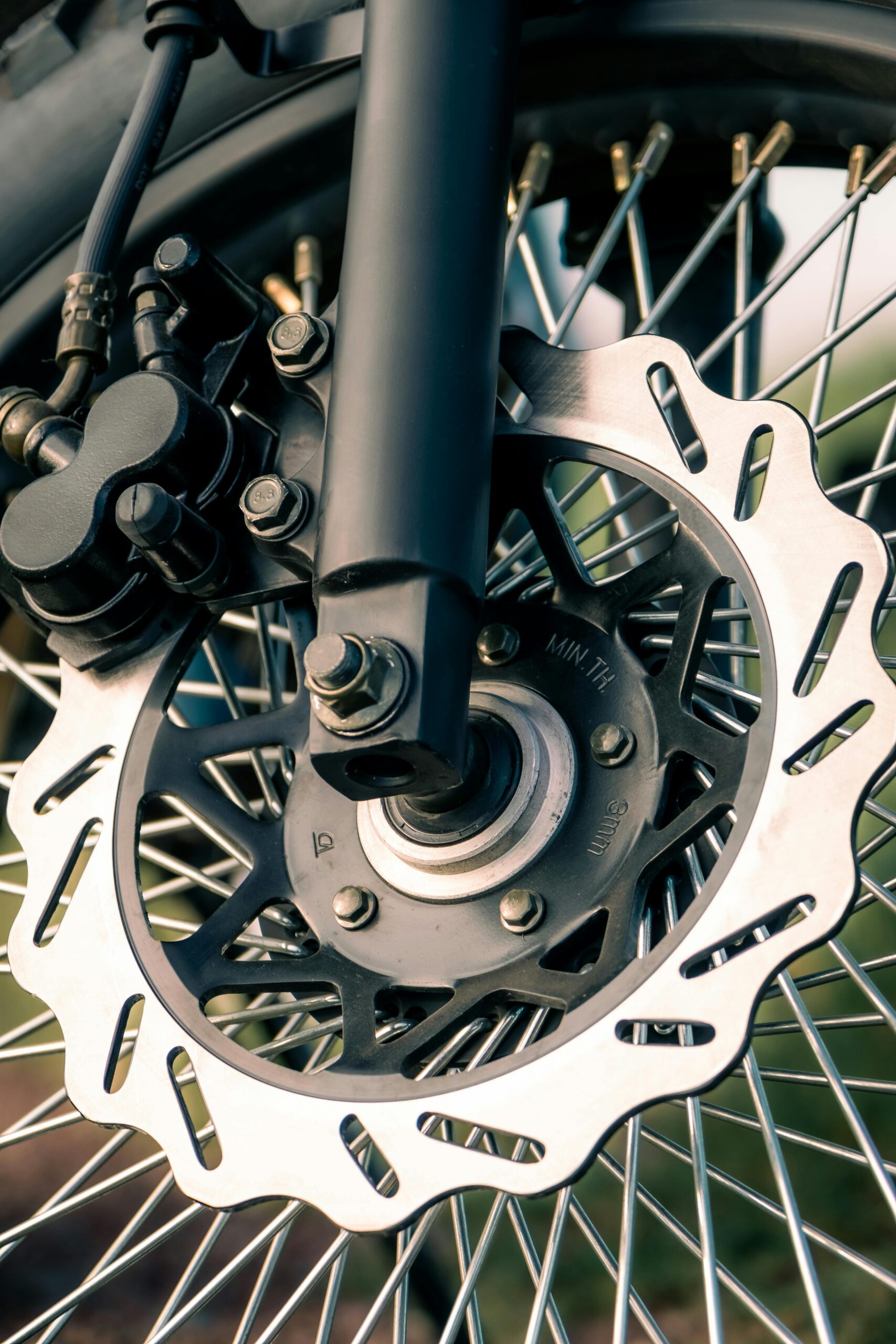
Hydraulic Brake System – Used in vehicles where pressure applied at the brake pedal is transmitted through brake fluid to stop the wheels.
Hydraulic Jack – Used for lifting heavy objects like cars during repair.

🔹 Example
Suppose a small piston of area A1=0.01 m2 is pressed with a force F1=100 N. The pressure is transmitted to a large piston of area A2=0.5 m2.
P=F1/A1=100/0.01=10000 Pa
Force on the large piston:
F2=P×A2=10000×0.5=5000 N
So, a small force of 100 N can lift a heavy load of 5000 N using Pascal’s principle.
✅ Conclusion
Pascal’s law explains how pressure in liquids behaves and why hydraulic devices are effective. It plays a crucial role in transport, industry, and everyday tools.