Lesson Notes: GASES
1. Laboratory Preparation of Carbon Dioxide and Ammonia and Their Properties
1.1 Preparation of Carbon Dioxide (CO₂) in the Laboratory
Principle:
A metal carbonate reacts with a dilute acid to produce CO₂ gas.
Common Method:
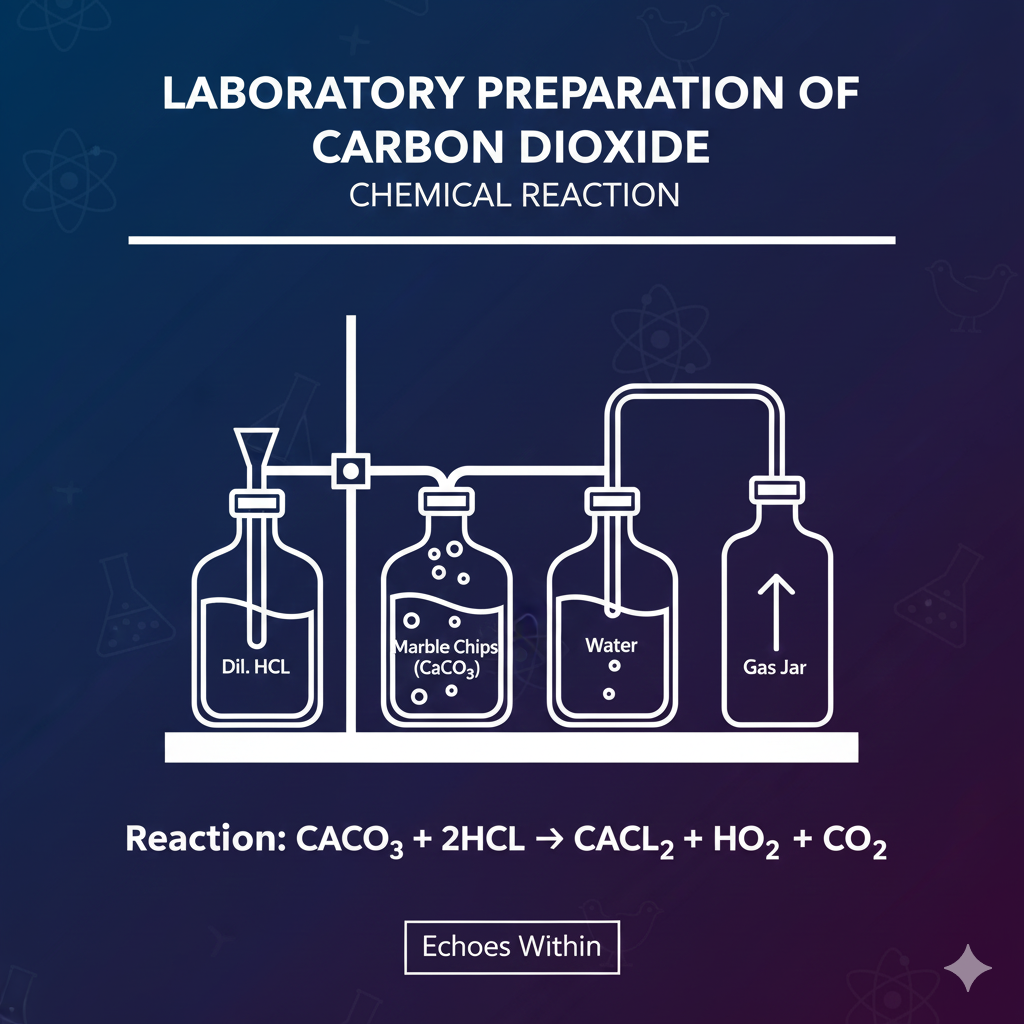
Chemical Reaction:
Apparatus: Conical flask, thistle funnel, delivery tube, gas jar.
Procedure:
Put marble chips (CaCO₃) in the conical flask.
Add dilute HCl through the thistle funnel.
CO₂ is produced and collected by downward delivery (since CO₂ is heavier than air).
1.2 Properties of Carbon Dioxide
Physical Properties:
Colourless and odourless gas
Slightly soluble in water
Denser than air
Turns lime water milky (forms insoluble CaCO₃)
Chemical Properties:
Non-combustible (does not burn)
Does not support burning
Reacts with metal oxides to form carbonates
Forms carbonic acid when dissolved in water
Practice : MCQs – Carbon Dioxide (CO₂)
1.3 Preparation of Ammonia (NH₃) in the Laboratory
Principle:
A mixture of ammonium salt and a strong alkali is heated to produce ammonia gas.
Common Reaction:
Procedure:
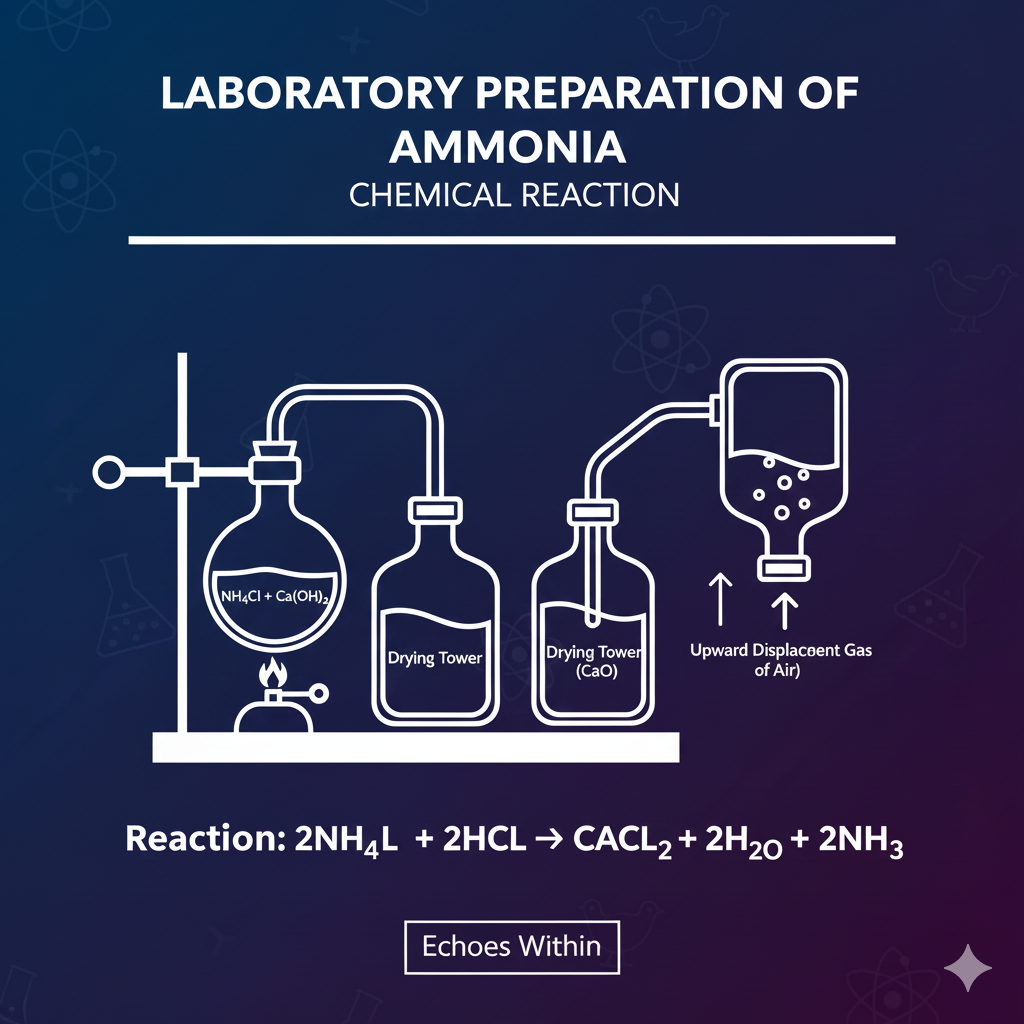
A mixture of ammonium chloride and slaked lime is heated in a flask.
Ammonia gas is formed and collected by upward delivery (lighter than air).
Use drying agent CaO to remove moisture (NH₃ dissolves in water).
1.4 Properties of Ammonia
Physical Properties:
Colourless gas with a sharp, pungent smell
Extremely soluble in water (forms ammonium hydroxide)
Lighter than air
Chemical Properties:
Basic in nature
Turns red litmus blue
Combusts in oxygen to give nitrogen and water
Reacts with HCl gas to produce dense white fumes of ammonium chloride
2. Importance / Utility of Carbon Dioxide and Ammonia
2.1 Uses of Carbon Dioxide
Used in fire extinguishers
Used in carbonated beverages (cold drinks)
Dry ice (solid CO₂) is used for refrigeration
Essential for photosynthesis in plants
Used in welding and chemical industries
2.2 Uses of Ammonia
Used in manufacturing fertilisers (urea, ammonium sulfate)
Used in the production of nitric acid
Used as a refrigerant
Cleaning agent in households (ammonium hydroxide)
Used in the textile, plastic, and pharmaceutical industries
Practice :MCQs – Ammonia (NH₃)
3. Acid Rain: Causes, Effects, and Control Measures
3.1 Causes of Acid Rain
Acid rain forms when acidic gases dissolve in rainwater.
Major pollutants:
Sulfur dioxide (SO₂) from industries, brick kilns, and fossil fuel burning
Nitrogen oxides (NOₓ) from vehicles, power plants
Carbon dioxide (CO₂) contributes weakly to acidity
These gases react with water vapour to form:
Sulfuric acid (H₂SO₄)
Nitric acid (HNO₃)
3.2 Effects of Acid Rain
Damages buildings (especially marble monuments)
Reduces soil fertility
Harms aquatic ecosystems (fish die due to pH change)
Affects plant growth
Corrodes metals and infrastructure
Causes respiratory problems in humans
3.3 Control Measures
Use low-sulfur fuels
Install scrubbers in industries and power plants
Promote electric vehicles and public transport
Use renewable energy sources
Reforestation and afforestation
Strict emission regulations
4. Greenhouse Effect: Causes, Consequences, and Control Measures
4.1 Causes of the Greenhouse Effect
The greenhouse effect occurs due to excessive greenhouse gases in the atmosphere.
Major greenhouse gases:
Carbon dioxide (CO₂)
Methane (CH₄)
Nitrous oxide (N₂O)
Water vapor
CFCs (Chlorofluorocarbons)
Human activities that increase greenhouse gases:
Burning fossil fuels
Deforestation
Industrial pollution
Excessive agriculture (cattle farming emits methane)
Use of refrigerators and ACs (CFC leakage)
4.2 Consequences / Effects of the Greenhouse Effect
Global warming
Melting of glaciers and rising sea levels
Unpredictable weather and climate change
Increase in natural disasters (floods, droughts, cyclones)
Extinction of species
Reduced agricultural productivity
4.3 Measures to Minimise Greenhouse Effect
Reduce fossil fuel use
Promote solar, wind, and hydropower
Plant more trees (afforestation)
Use energy-efficient appliances
Reduce, reuse, recycle
Minimise the use of CFC-based products
Practice sustainable agriculture
Practice :20 MCQs – Whole Lesson on Gases
Conclusion (SEO-Friendly)
Understanding the preparation, properties, and uses of gases like carbon dioxide and ammonia helps students connect chemistry with everyday life. Likewise, learning about acid rain and the greenhouse effect builds environmental awareness and encourages sustainable practices. These notes provide clear, exam-focused explanations for NEB/SEE students.
Practice: ⭐ HOTS MCQ Set – Gases