
Echoes Within

Course Content
Intro About Course
This **Class 10 Science and Technology** course is tailored for school-level students and strictly follows the official syllabus issued by the [Curriculum Development Centre (CDC) Nepal](https://moest.gov.np/cdc) for the academic year **B.S. 2078**.Aligned with the subject code **SCT.008**, this course ensures that learners grasp key concepts, prepare effectively for exams, and gain practical scientific knowledge. It includes updated topics based on the latest **CDC Nepal curriculum**, making it ideal for students aiming for academic excellence in the **Class 10 board examination**.👉 For a detailed unit-wise breakdown, visit our [Class 10 Science Full Syllabus Page](#) (Replace `#` with the internal page URL)This course is suitable for self-study, school use, or as a revision tool, offering clear explanations, diagrams, and sample questions.Stay ahead in your learning with the most trusted and structured **Class 10 Science and Technology course in Nepal**. Official Syllabus PDF You can download the official syllabus directly from the CDC Nepal website: Download Class 10 Science and Technology Syllabus (PDF)Course Units Overview The Class 10 Science and Technology curriculum is structured into several units, each focusing on different scientific concepts. While the exact unit titles and content may vary, the syllabus typically includes the following areas:
1. Scentific Learning
After comletion of this topic, students will be able to : 1.1 - investigate independent variable, dependent variable, and control variablein scientific research and mention importance of control variable. 1.2 - differetiate between fundamental and derived units. 1.3 - to investigate the fundamental units involved in derived unit. 1.4 - to use the fundamental units in physical equation to examine their homogeneity.
0/7
2. Classification of Living Beings
Upon completion of this topic, the students will be able to : 2.1 -classify plants and animals on the basis of five-kingdom classification system and explain the characteristics of each division (of plants) and phylum (of animals) with examples. 2.2 -classify the subdivision angiosperms upto the class and compare their classes. 2.3 -classify the sub-phylum vertebrata upto the class and compare their classes. 2.4 -describe the relationship between classification of living beings and their evolution.
0/2
3. Honey Bee
Upon completion of this topic, the students will be able to : 3.1 describe the life cycle of a honeybee. 3.2 explain the importance of honeybees.
0/2
Heridity
Heredity is the process by which traits are passed from parents to offspring through genes. It explains why children resemble their parents and why certain diseases or features run in families. After studing this topic (Heridity) students are able to learn and understand about to : -explain about concept and importance of Mitosis and Meiosis Cell Division. - introduce chromosome and gene. -differentiate between DNA and RNA on the basis of structure and function. And to tell Importance of DNA Test in different research. - explain the role of sex chromosome in sex determination of human. - explain Mendel's Laws related to monohybrid cross. -introduce Genetic Technology, and its uses related to research.
0/12
Physiological Structure and Life Process
The human body is a complex system made up of various physiological structures that work together to sustain life. These structures include organs, tissues, and systems like the circulatory, respiratory, digestive, nervous, and excretory systems. Each life process—such as nutrition, respiration, transportation, excretion, growth, reproduction, and response to stimuli—is carried out by specialized organs and systems. These life processes are essential for: Maintaining homeostasis (internal balance), Providing energy, Removing waste, Ensuring survival and reproduction. For example: The digestive system breaks down food for energy, The respiratory system exchanges oxygen and carbon dioxide, The circulatory system transports nutrients and oxygen, The nervous system helps in control and coordination. Together, these physiological structures and life processes form the foundation of biological function, allowing organisms to live, adapt, and interact with their environment.
0/5
Motion and Force
After completion of this topic, the students will be able: - state the universal law of gravitation and solve numericals problems related to it. - define acceleration due to gravity and express its relation to the distance between the surface and center of earth. - introduce gravity and calculate the weight of a body. - introduce the concept of free fall. - describe the effect of air resistance on falling objects and investigate its advantage in daily life.
0/5
Pressure
Upon completion of this topic, the students will be able to: 1.State and demonstrate Pascal's law and investigate its use in daily life. 2.Introduce upthrust in liquid and gas. 3.State and demonstrate Archimedes' principle and investigate its usein daily life.
0/4
Heat
After completion of this topic, the students will be able to: 1.Introduce thermal energy, heat and temperature. 2. Explain the effect of heat on the molecular motion and change in the volume of abody and investigate the importance of anomalous expansion of water. 3. Introduce specific heat capacity of different bodoies and solve simple numerical problems related to it. 4.provide a brief description of the working principles of a laboratory thermometer, a digital clinical thermometer, and a radiation thermometer; and demonstrate the calibration of a thermometer through experimentation.
0/3
Wave
After completion of this topic, the students will be able to: 1. explain the concept of wave refraction and demonstrate the laws of refraction. 2. introduce total internal reflection(TIR) of waves and explain the importance of TIR in sound and light wave applications. 3. demonstrate the dispersion of light and identify its practical applications in daily life. 4. define terms related to lenses and illustrate the laws of refraction by a lens using diagrams. 5. demonstrate the process of forming an image of an object through a lens and describe the features of the resulting image. 6.define optical power and explain the relationship between the lens and curve and its power. 7. describe the process of image formation in the human eye, accompanied by a diagram. 8. describe the types, causes, and correction of vision defects, supported by diagrams. 9. mention the effects of injury to the cornea on vision and introduce problems such as night blindness, cataracts, and colour blindness.
0/7
Electricity and Magnetism
After completion of this topic, the students will be able to: 1. introduce direct current and alternating current. 2. demonstrate and sketch the diagram of the magnetic field formed around a straight wire and a solenoid with an electric current in them. 3. introduce magnetic lines of force and magnetic flux. 4.introduce the motor effect and describe its use in daily life. 5. mention Faraday's law of electromagnetic induction and explain the working process of dynamo and generator based on it. 6. state the structure, working method, and importance of a transformer and solve simple numerical problems based on it.
0/3
Universe
After completion of this topic, the students will be able to: 1. mention the importance of gravitational force in the universe. 2. describe the origin of the universe based on the Big Bang Theory. 3. state the conclusion of Hubbel's study related to the motion of heavenly bodies. 4. write about the future of the universe based on the law of gravitation.
0/3
Information and Communication Technology(ICT)
After completion of this topic, the students will be able to: 13.1. introduce the types of signals and use of the digital signals in our everyday life. 13.2. mention the differences between bit and bytes. 13.3. explain the mecanism of digital signal transmission with examples. 13.4. discuss some responsibilities of netizens, online reputation and digital wellbeing. 13.5. discuss the importance of multimedia in the classroom.
0/3
Classification of Elements
After completion of this topic, the students will be able to: 1. demonstrate the understanding of modern periodic table. 2. describe the interrelation between the elements of certain groups and periods based on their atomic size, electropositivity, electronegativity, valency, and reactivity. 3. explain the classification of elements in the modern periodic table. 4. explain the position of metals, non-metals, and metalloids in the modern periodic table. 5. write the electronic configuration of elements up to the atomic number 20 on the basis of subshell.
0/3
Chemical Reaction
After completion of this topic, the students will be able to: 1. describe the types of chemical reactions with examples. 2.explain and demonstrate experimentally the factors affecting the rate of chemical reactions.
0/4
Gases
After completion of this topic, the students will be able to: 1. describe the methods of preparation of carbon dioxide, and ammonia gases in the laboratory and mention their properties. 2. describe the importance(utility) of carbon dioxide and ammonia. 3. explain the causes, effects, and control measures of acid rain. 4. describe the causes, consequences of greenhouse effects, and explain the measures to minimize the effects.
0/6
Metals and Non-Metals
After completion of this topic, the students will be able to: 1. introduce minerals and ores. 2. tell the name of the main ores of iron, copper, silver, and aluinium. explain the process of extraction of metals from their ores briefly.
0/2
Hydrocarbon and its compounds
After completion of this topic, the students will be able to: 1. introduce hydrocarbon with examples. 2. write IUPAC name, molecular structure and uses of hydrocarbons having carbon atom 1 to 4. 3. differentiate between saturated and unsaturated hydrocarbons. 4. write the types and molecular formulae of alcohol based on the number of hydroxyl group (-OH). 5. investigate the uses of alcohols such as methanol, ethanol, and glycerol.
0/2
Chemicals Used in Daily Life
After completion of this topic, the students will be able to: 1. introduce food preservatives and tell their proper uses. 2. introduce the chemicals used for cleanliness and mention their proper uses. 3. tell the precautions to be taken while storing and using different poisonous chemicals. 4. investigate the industrial chemicals that causes chemical pollution and describe their control measures.
0/3
👉 “SEE 2082 Practice Questions with Answers (Based on Latest Exam Pattern)”
Here is SEE Model Question set as pattern issued by CDC to practice. And Echoes Within try to help you to check your answer with answer written here if required. “These questions are created for practice based on SEE exam pattern and are not official questions from CDC Nepal.”
0/4
Entrance Preparation – Science Practice Set 1
Overview ​Transitioning from SEE to Grade 11 requires more than just memorization; it requires a deep conceptual understanding of Physics, Chemistry, and Biology. Practice Set 1 is a curated collection of high-yield Multiple Choice Questions (MCQs) designed to bridge the gap between secondary school and higher secondary science. ​What You Will Learn ​This set focuses on the core pillars of the Nepal CDC curriculum, with an added layer of difficulty to match the standards of Kathmandu’s top colleges and scholarship examinations. ​Physics: Mastery of fundamental concepts in Force, Energy, and Light (Refraction/Lenses). ​Chemistry: Quick-solving techniques for Chemical Reactions, Atomic Structure, and Periodic Table trends. ​Biology: Critical questions on Human Systems and Life Processes often overlooked in SEE textbooks. ​Key Features ​Scholarship Level: Questions are modeled after previous entrance exams from institutions like St. Xavier’s, SOS, and Budhanilkantha. ​Time Management: Designed to be completed in a timed environment to improve your speed and accuracy. ​Logic-Based: Every question includes a brief explanation to help you understand the why behind the answer, not just the what. ​Who Is This For? ​Students aiming for Full Scholarships in Kathmandu-based colleges. ​Students preparing for entrance exams at prestigious institutions across Nepal. ​Learners who want to strengthen their foundation before starting the Grade 11 Science stream. ​Teacher's Note: Success in entrance exams isn't just about how much you know, but how quickly you can apply that knowledge. Start with Set 1 to build your confidence and identify your weak spots early!
0/1
Class – 10 (Science and Technology)

SEE Practice Model Set 2

[EWA1B2C3D0]

Time: 3 hours                                                    FM: 75

All the questions are compulsory.

                               Group ‘A’               [10X1=10]

1. Write the best alternative to the following questions in the answer sheet.

a. Which is the smallest unit of computer memory?

I. Kilobyte

ii. Megabyte

iii. Bit

iv. Gigabyte

b. Why is pine kept in the sub-division gymnosperm?

I. It has needle-shaped leaves.

ii. It has naked seed.

c. Which of the following groups of organism are closely related on the basis of evolution?
A. Porifera, Annelida, Chordata
B. Porifera, Arthropoda, Chordata
C. Coelenterata, Arthropoda, Chordata
D. Platyhelminthes, Nemathelminthes, Annelida
d. What is the main cause of increasing the level of ocean?
A. Deforestation
B. Heavy rainfall
C. Flood and landslide
D. Increase in the temperature of the earth.
e. Calculate the mass that a person can lift on the Moon if he can lift a mass of 50 kg on the earth. The value of g on the surface of the Earth is 9.8 m/s² and that of the moon is 6 times less.
A. 200.6 kg
B. 300.6 kg
C. 400.6 kg
D. 500.6 kg
f. If large Piston A and small Piston B of a hydraulic lift have their cross-sectional area, pressure and force / weight are A1 and A2, P1 and P2 and F1 and F2 respectively, then which of the following reaction would be correct according to Pascal’s law?
A. P1 > P2
B. A1 <A2
C. F1 > F2
D. F1 < F2
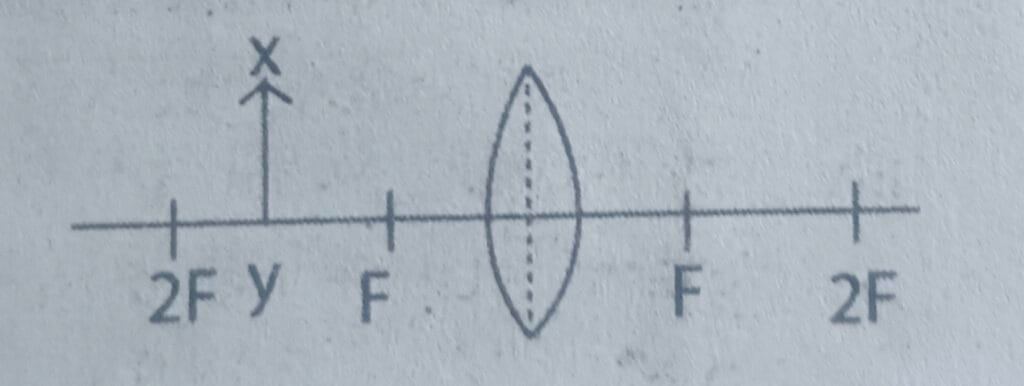
g. Identify the characteristics of the image of the object XY kept in front of the lens as shown in the given figure.
SEE Practice Model Set 2

A. Virtual, erect and magnified
B. Real, erect and magnified
C. Virtual, inverted and diminished
D. Real, inverted and magnified
h. Which of the following is proved by Hubble’s law?
A. Universe is contracting
B. University is expanding
C. University remains same
D. Galaxies appear to be closer
I. Which one is a double displacement reaction from the following?
A.
j. A statement and two arguments are given below.
Statement: Detergent is called soapless shop
Argument 1: It has cleaning properties like soap but it’s chemical nature is different.
Argument 2: It does not give lather with hard water as soap.
A. Statement and argument 2 are correct but argument 1 is incorrect
B. Statement and argument 2 are incorrect but argument 1 is correct.
C. Statement and argument 1 are correct but argument 2 is incorrect.
D. Statement and argument 1 are incorrect but argument 2 is correct.

Group ‘B’                [9X1 =9]

Very short answers types questions.
a. What are dependent variables? Write with an example.
b. Write the relation between upthrust and weight of displaced liquid.
c. The apparent depth of water in a pond appears less than the real death. why?
d. What is the focal length of lens having power 1 diopter?
e. A fan in a room rotates when its switch is made on, which principle is used here?
f. Which force is responsible for the existence of heavenly bodies in the universe?
g. Write the name off name aur off iron.
h. Why is reduction of active metal possible only by the electro refining method?
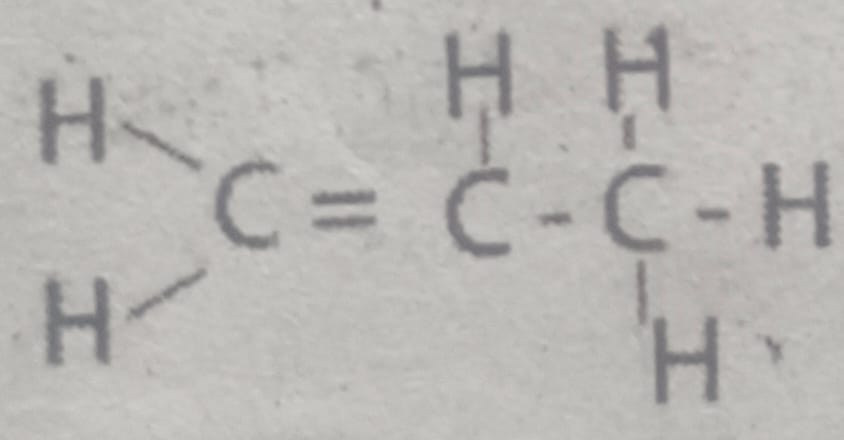
I. Write the molecular formula of the given compound.
SEE Practice Model Set 2

Group ‘C’                [14X2=28]

Short answer type questions.
3. Check the correctness of the equation V² = U²+ 2as² by using unit wise analysis.
4. Write any two characteristics of monocotyledon plant.
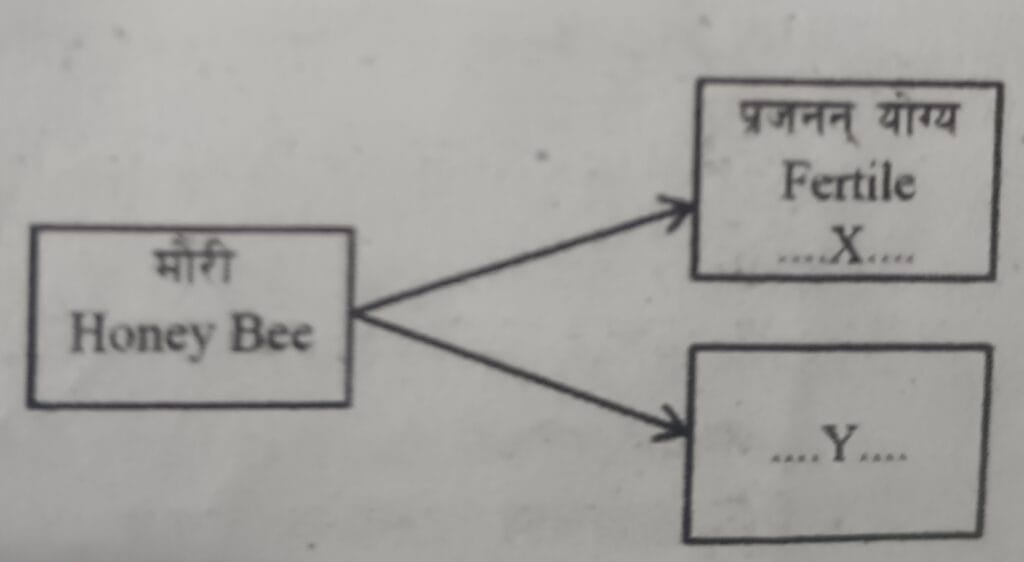
5. Study the concept map given below and mention the number of chromosomes in X and Y to distinguish haploid and diploid.
SEE Practice Model Set 2
6. Write any two differences between mitosis and meiosis cell division.
7. Draw a probability table of the result obtained in sex determination.
8. Mention two functions of blood on human body.
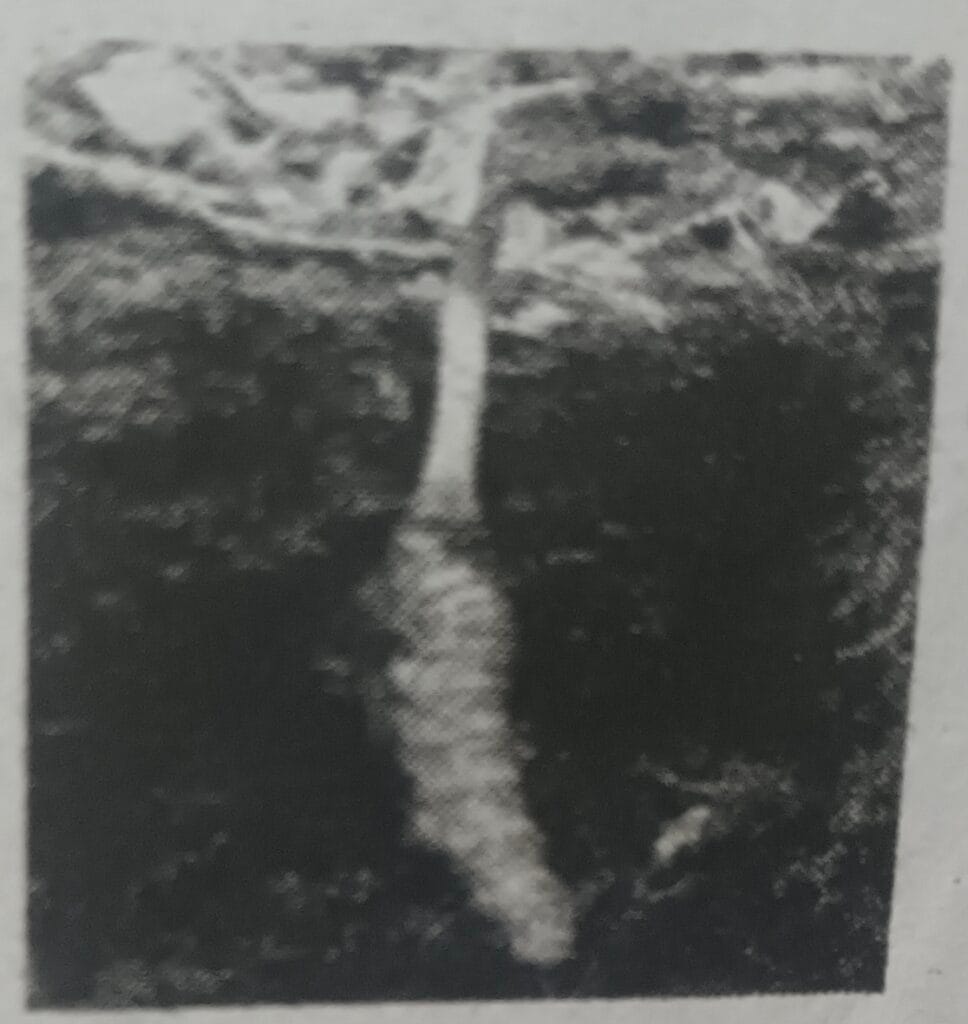
9. Identify the medicinal plant shown in the figure and write its uses.
SEE Practice Model Set 2
10. What is acceleration due to gravity? What is the value of acceleration due to gravity on the pole of the earth?
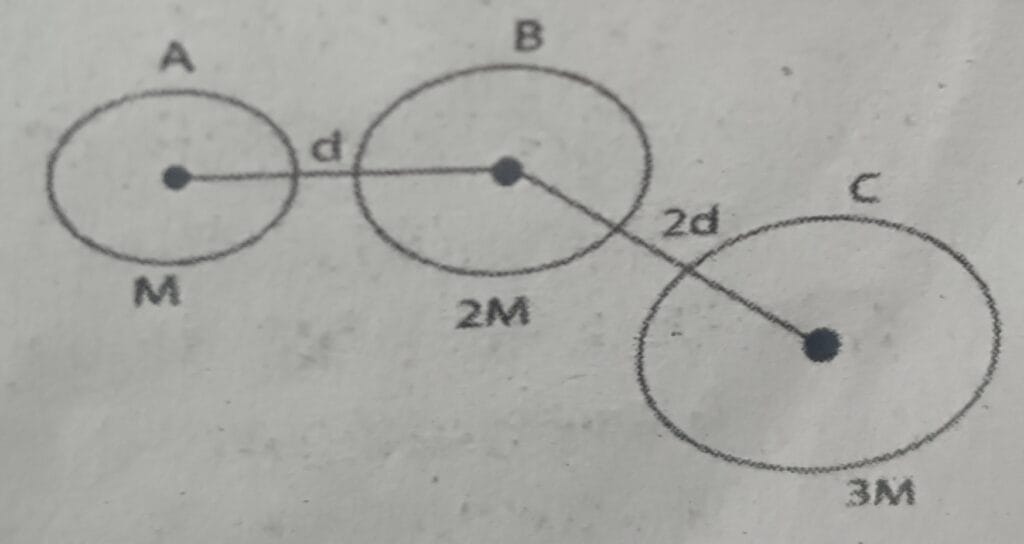
11. If gravitational force between A and B is F. What is the gravitational force between B and C in terms of F.
SEE Practice Model Set 2
12. Write any two differences between electric motor and generator.
13. If the load transmission at Dhalkewar Dhanusha transmits electricity of 400 KV, then which type of transformer is used here? Also draw a figure showing primary (input) coil and secondary (output) coil in it.
14. A thin zinc plate was kept in a glass container having copper sulphate solution. On examining, it was found that blue colour of solution is getting lighter and lighter. After few days when zinc plate was taken out of the solution a number of small holes where noticed in it. State the reason and write the chemical equation of the reaction.
15. Monohydric alcohol is used as thermometric liquid and as disinfectant in syringe and wounds. On the basis of statement, write the answer of the following questions.
a. Write structural formula of that alcohol.
b. Right molecular formula of 4th member of alcohol of the homologous series in which the given alcohol lies.
16. How is bacterial growth inhibited by salting or adding sugar in food materials?

Group ‘D’

Write long answer.                                   [7 X4 =28]

17. “A blog addressed at https://www.celebree.com/blog/resources/the-pros-and-cons-of-technology-in-education/  writes:  …… Technology has become a foundational component in many areas of our daily lives, as well as our childrens. Within the confines of the classroom and learning environment, technology can be both beneficial and problem matric for students. …..”

I. Which technology does the blog describe?

ii. The technology mentioned in the blog also has advantage. Write any two disadvantages.

iii. Mention anyone use of AI in the technology mentioned above. 

18. Read the newspaper article and answer the questions that follow.


            A copying machine for living bWithout

Without any doubt, if there had been elections for the animal of the Year 1997, Dolly would have been the winner! Dolly is a Scottish ship that you see in the photo. But Dolly is not just a simple sheep.SEE Practice Model SET She is a clone of another sheep. A clone means: a copy. Cloning mans copying ‘from a single master copy’.
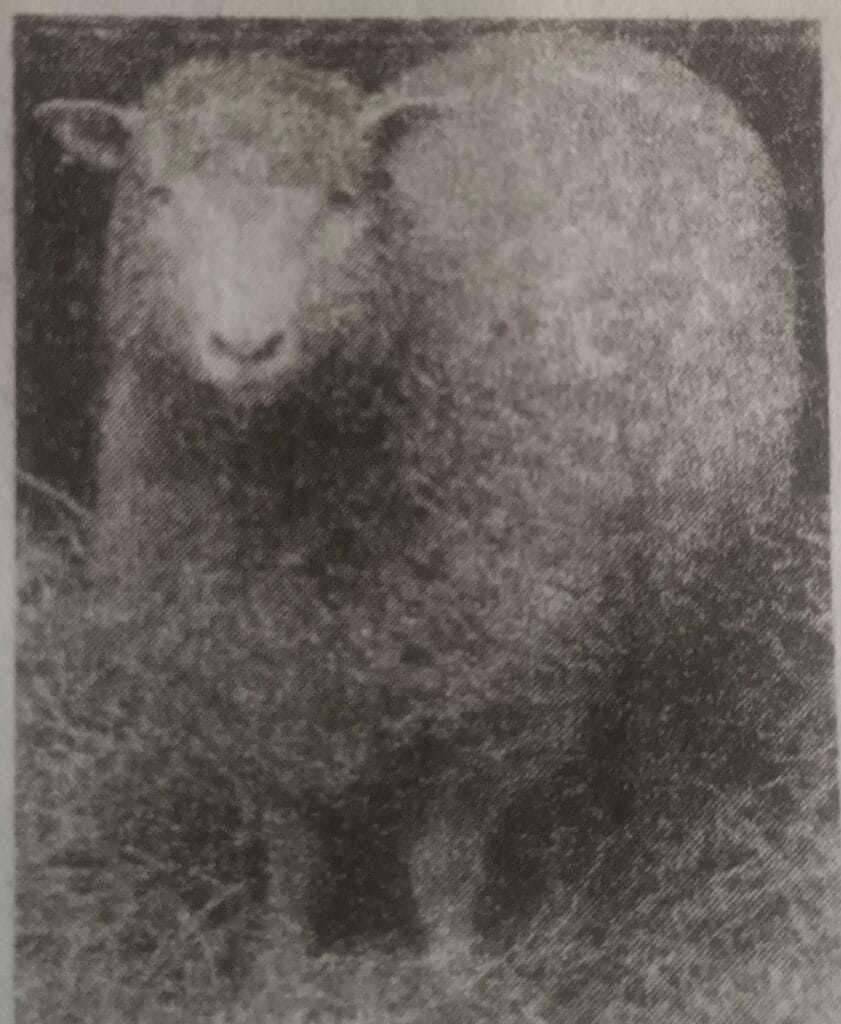
It was the Scottish scientist Ian wilmut who designed the ‘copying machine’ for sheep. He took a very small piece from the udder of an adult sheep (sheep 1).

From that  small piece he removed the nucleus, then he transferred the nucleus into the egg-cell of another (female) sheep (sheep 2). But first he removed from that egg cell all the material that would have determined sheep 2 characteristics in a lamb produced from that egg-cell.Ian Wilmut implanted the manipulated egg-cell of sheep 2 into yet another (female) sheep (sheep 3). Sheep 3 become pregnant and had a lamb: Dolly.

Some scientists think that within a few years it will be possible to clone people as well. But many governments have already decided to forbid cloning of people by.


I. Which sheep is Dolli identical to?

ii. In the text, part of the udder that was used is described as ‘a very small piece’. From the article text you can work out what is meant by “a very small piece”.

iii. In the last sentence of the article it is stated that many governments have already decided to forbid cloning of people by law. Two possible reasons for this decision are mentioned below. Are these reasons scientific reasons? Circle either ‘Yes’ or ‘No’ for each.

Reasons

Scientific

Cloned people could be more sensitive to certain diseases then normal people.

Yes / No

People should not take over the role of a creator.

Yes/No

19. Write any two symptoms of high blood pressure and any two preventive measures. (K)
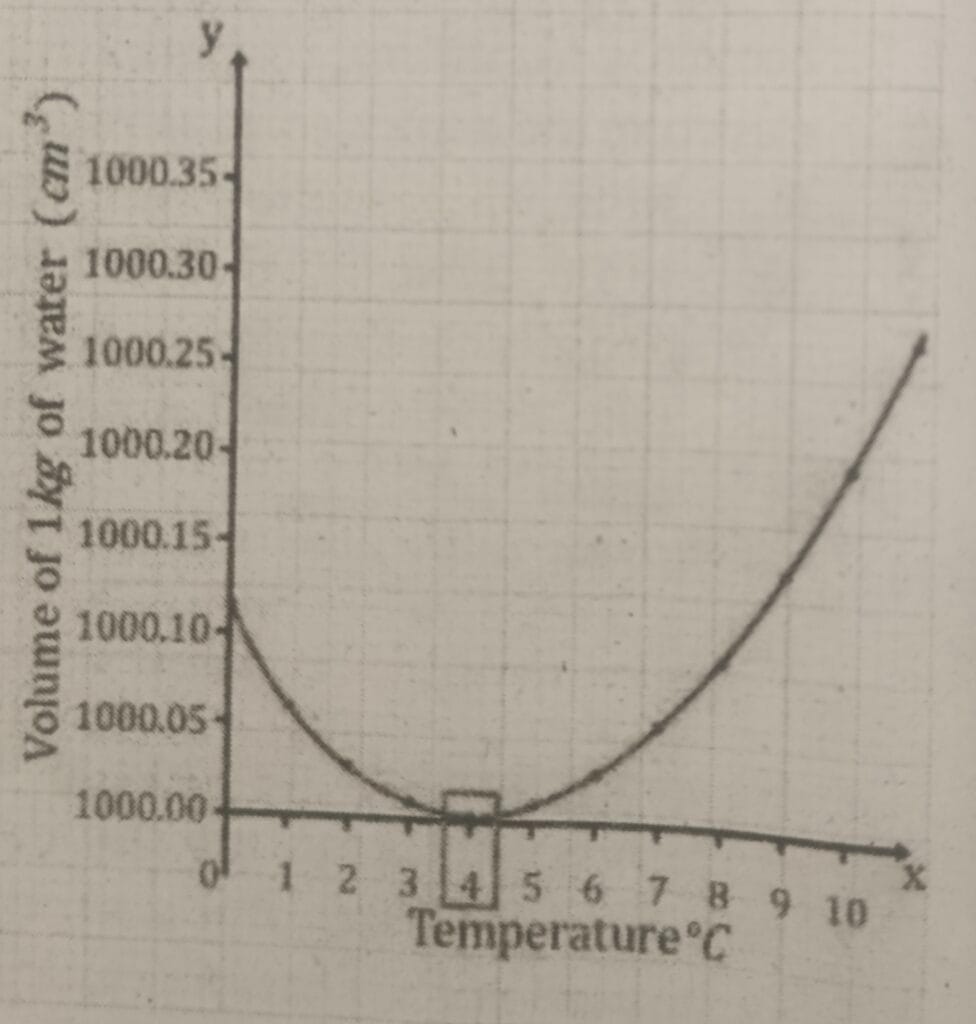
20. The relation between volume of water and temperature is shown in the given graph. Study the graph and answer the following question. (HA)
SEE Practice Model Set 2

i. What is the special property of water shown in the picture called? 

ii. Write the change that took place in density of water on heating water from zero degree to 10⁰C.

iii. Write any one effect of this special property of water. 

21. Answer the following questions.

I. Write any two differences between convex lens and concave lens. (U)
ii. Between air and glass, air is called rarer medium and glass is denser medium, why?(U)

22. Answer the following questions on the basis of electronic configuration of element A and B given below. (U)

A = 1s², 2s² 2p⁶, 3s² 3p⁶, 4s¹

B = 1s², 2s² 2p⁴

I. In which group element A belongs in periodic table?

ii. In which period element B belongs in periodic table?

iii. Write down molecular formula of compound formed by combination of A and B.

iV. Why is element B kept in p block of periodic table?

23. Draw available diagram of laboratory preparation of ammonia gas and write down a method to test this gas in the gas there. (A).                             1+2+1

          Best of Luck