
(Solar Energy Student Discipline)
What if the secret to better focus, stronger memory, and real academic success isn’t a new app or technique—but something as simple as sunlight? In an age where students struggle with distractions, late-night study habits, and burnout, an ancient yet powerful discipline is quietly being forgotten: aligning your life with solar energy.
For centuries, students followed routines based on sunrise and sunset, not out of tradition alone, but because it naturally enhanced their mental clarity, physical energy, and learning capacity. The sun, being the ultimate source of energy, indirectly fuels our bodies through food, light, and biological rhythms. When students align their daily routine with this natural energy cycle, they unlock a level of focus and productivity that artificial schedules often fail to deliver.
In the previous article, we explored “From Sunlight to Success: The Powerful Study Discipline Ancient Students Used” with 5 essential qualities of students and a study timetable to be followed.
In this article, we explore how this forgotten discipline works and how modern students—especially those preparing for competitive science exams—can use it to transform their study habits and achieve lasting success.
Traditional lifestyle Aligns with Nature
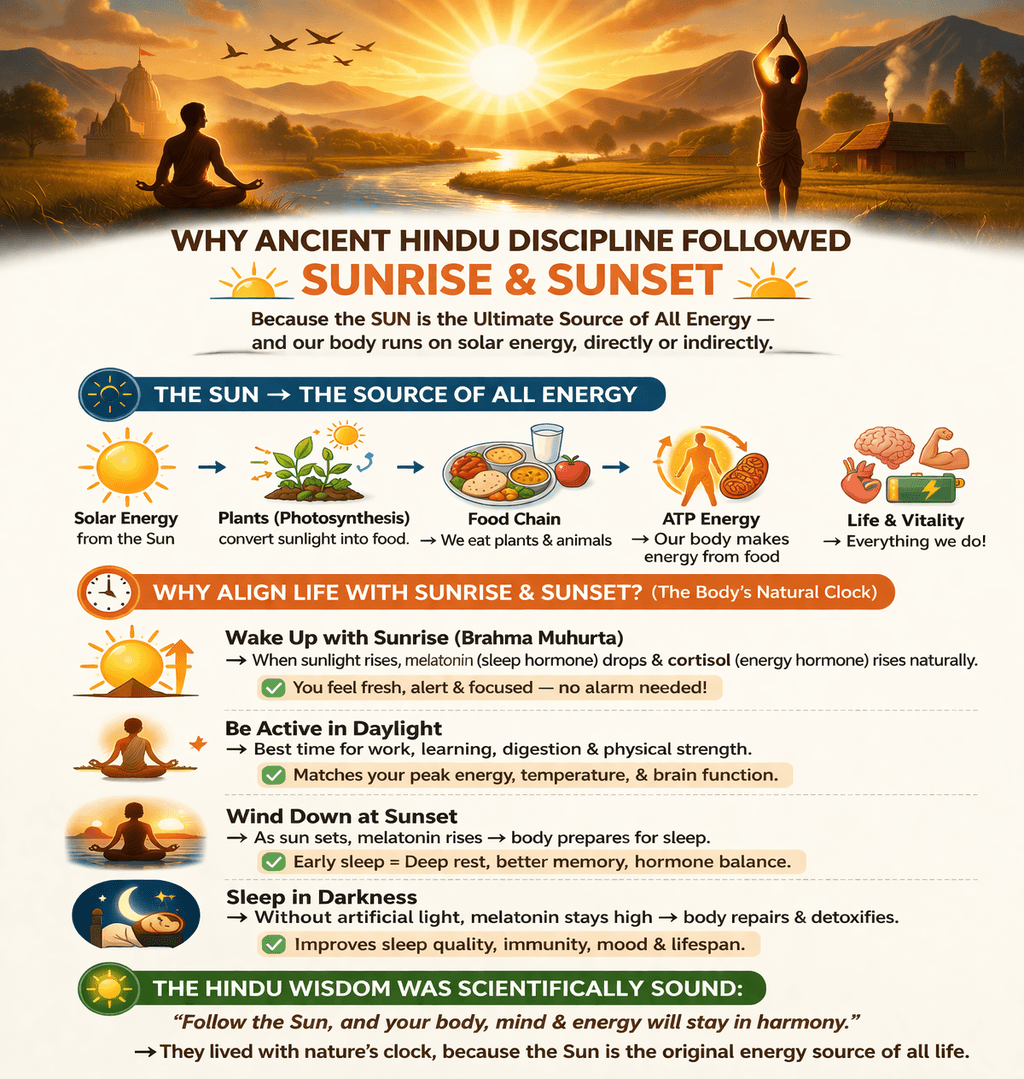
In Hindu philosophy and traditional lifestyle, daily routines were often aligned with sunrise (सूर्योदय, Sūryodaya) and sunset (सूर्यास्त, Sūryāsta). This was not arbitrary—it had scientific, spiritual, and psychological reasons. Here’s a clear explanation:
1. Alignment with Nature’s Rhythm (Circadian Rhythm)
- The sun dictates the natural cycle of light and darkness, which affects hormones, digestion, energy, and sleep patterns.
- Rising with the sun and sleeping after sunset helped people stay healthy and energetic.
- Modern science confirms that exposure to morning sunlight boosts melatonin regulation, vitamin D production, and overall well-being.
2. Spiritual Discipline (Sādhana and Rituals)
- Hindu philosophy emphasises Brahma Muhurta, roughly 1.5 hours before sunrise, as the ideal time for meditation, study, and spiritual practices.
- Sunrise symbolises knowledge, awakening, and divine energy, so starting the day early aligned the mind with clarity and discipline.
3. Efficient Use of Natural Light
- Before artificial lighting, aligning daily activities with daylight was practical: work, study, and chores were done when light was available.
- This encouraged efficiency, productivity, and minimal wastage of resources.
4. Moral and Mental Conditioning
- Following a disciplined schedule based on sunrise and sunset instilled self-control, punctuality, and consistency.
- It created a rhythm for life, which helped manage both physical needs and mental focus.
5. Seasonal and Agricultural Relevance
- For agrarian societies, daily work and rituals were tied to sun cycles, ensuring crop care, harvesting, and prayer for natural forces at the right time.
6. Integration of Body, Mind, and Spirit
- Hindu philosophy treats the human being as a microcosm of nature. Aligning life with the sun helped synchronise internal cycles (body, mind, spirit) with cosmic cycles, leading to balance and health.
In essence, following sunrise and sunset was both practical and spiritual—it promoted health, discipline, productivity, and harmony with nature, forming a foundation for a balanced life.
How Does Solar Energy connect to human life and discipline
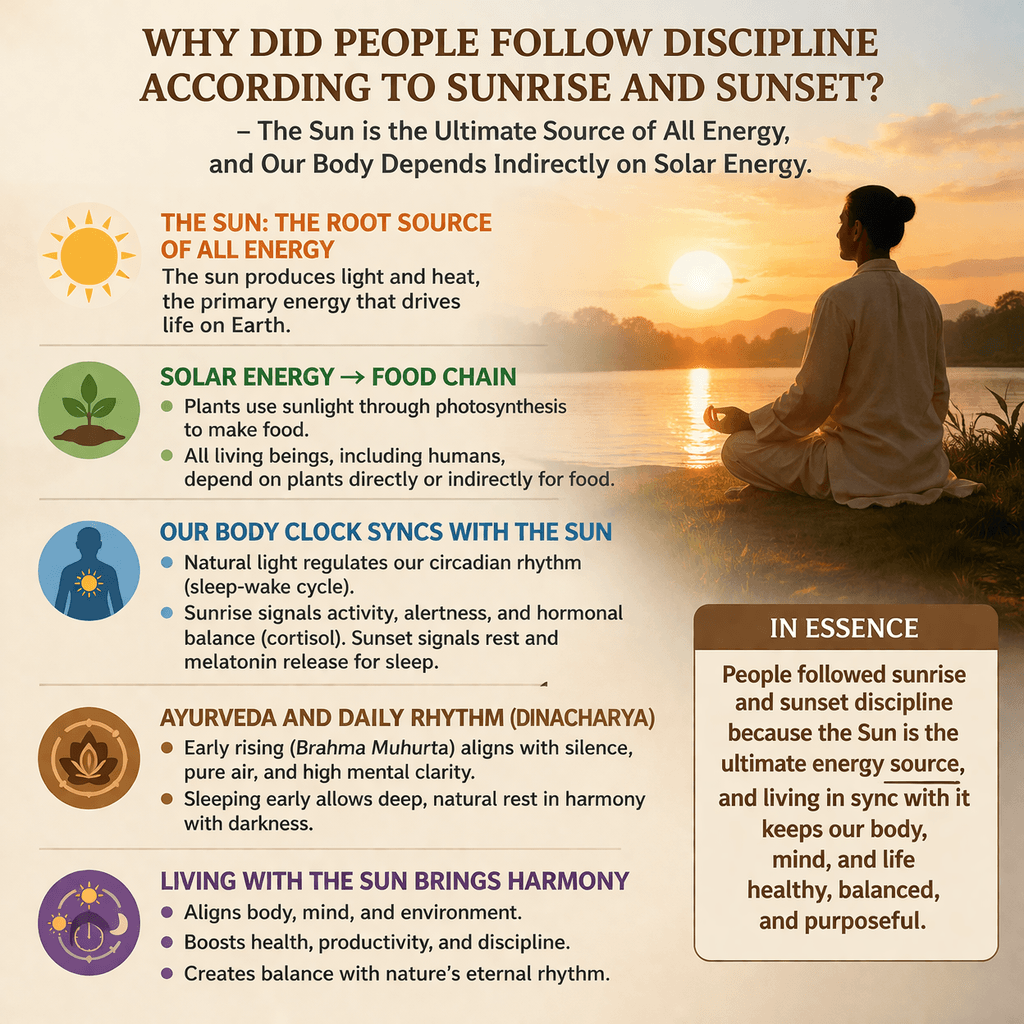
Let’s focus on the sun as the ultimate source of energy and how it connects to human life and discipline:
1. The Sun: Ultimate Source of Energy
- The sun is the primary source of energy for all life on Earth.
- Plants capture solar energy through photosynthesis, producing oxygen and food. Animals and humans then consume plants or other animals, so all our food energy originates indirectly from the sun.
2. Our Body Depends on Solar Energy
- Vitamin D synthesis: Exposure to sunlight enables our skin to produce vitamin D, essential for bones, immunity, and overall health.
- Circadian rhythm regulation: Sunlight regulates hormones like melatonin and cortisol, which control sleep, alertness, and metabolism.
- Energy balance: Sunlight influences our mood, mental alertness, and productivity, essentially powering our body and mind indirectly.
3. Ancient Discipline Aligned with the Sun
- Hindu philosophy recognised that human life depends on solar energy, so daily routines were aligned with sunrise and sunset.
- Rising with the sun ensured maximum utilisation of natural energy for mental, physical, and spiritual activities.
- Sleeping after sunset preserved the energy balance and allowed rest when solar energy decreases.
4. Spiritual and Symbolic Significance
- The sun is considered Savitr or Surya, a symbol of knowledge, vitality, and life-force.
- Aligning human activities with the sun is not just practical—it also reflects living in harmony with the ultimate source of energy, acknowledging that our body and mind are part of the cosmic energy cycle.
5. Modern Implications
- Even today, following a schedule aligned with sunlight improves energy efficiency, mental clarity, and health.
- Working, studying, or exercising during daylight maximises our body’s natural energy intake, while artificial light cannot fully replace solar energy’s biological effects.
In short:
The sun is the engine of life on Earth, and our bodies depend on its energy indirectly through food, light, and circadian cues. Hindu discipline of following sunrise and sunset was a practical, health-oriented, and spiritual recognition of this fundamental truth—living in rhythm with the sun ensures that we harness life’s primary energy source efficiently.
Here’s a clear, practical daily routine for students based on solar energy (sunrise–sunset discipline), adapted for modern life:
Morning (Before & At Sunrise) – Energy Activation
- Wake up (around sunrise or earlier)
- Aligns your body clock with natural light.
- Hormones like cortisol rise → you feel fresh and alert.
- Sunlight exposure (10–20 minutes)
- Go outside or near a window.
- Helps vitamin D and sets your circadian rhythm.
- Light exercise/yoga/breathing
- Activates the body using natural energy.
- Improves focus for study.
- Study (high-focus subjects)
- The brain is freshest in the morning → best time for science, math, problem-solving.
☀️ Daytime (Mid-Morning to Afternoon) – Peak Productivity
- Healthy breakfast & balanced meals
- Food = stored solar energy from plants/animals.
- Avoid heavy overeating → keeps the mind active.
- School / Deep Study Sessions
- Daylight hours = maximum mental performance.
- Use techniques like 50–60 min focus + short breaks.
- Stay physically active
- Walk, stretch, or light activity.
- Keeps energy flow active like natural cycles.
Evening (Sunset Time) – Slow Down & Reflect
- Reduce screen exposure after sunset
- Artificial light disturbs natural rhythm.
- Light revision/reading
- Avoid heavy new topics → focus on revision or light learning.
- Spend time with family/reflection
- Builds emotional balance and reduces stress.
Night (After Sunset) – Recovery Phase
- Eat a light dinner (2–3 hours before sleep)
- Helps digestion and promotes better sleep.
- Sleep early (around 9–10:30 PM)
- Darkness increases melatonin → deep rest.
- The body repairs and stores energy for the next day.
🔁 Core Principle (Very Important)
- Morning = Input energy (sunlight + study)
- Day = Use energy (work + learning)
- Evening = Slow down (reflection)
- Night = Restore energy (sleep)
✅ Simple One-Line Routine
“Wake with the sun, work with the light, slow at sunset, and sleep in darkness.”
Conclusion (Powerful + Action-Oriented)
In the race for academic success, many students look outward—for better tools, smarter techniques, or longer study hours. But the real transformation begins when you align your inner energy with nature’s energy. Solar energy is not just a scientific concept; it is the foundation of life itself, silently powering your body, brain, and daily performance.
By following a routine guided by sunlight—waking early, studying during peak natural energy hours, maintaining balanced habits—you don’t just study more, you study smarter and live healthier. This forgotten discipline doesn’t demand perfection; it asks for awareness and consistency.
Start small. Wake up with the sun. Feel the difference in your focus, energy, and clarity. Because sometimes, the simplest shift—toward the light—can change your entire life.