
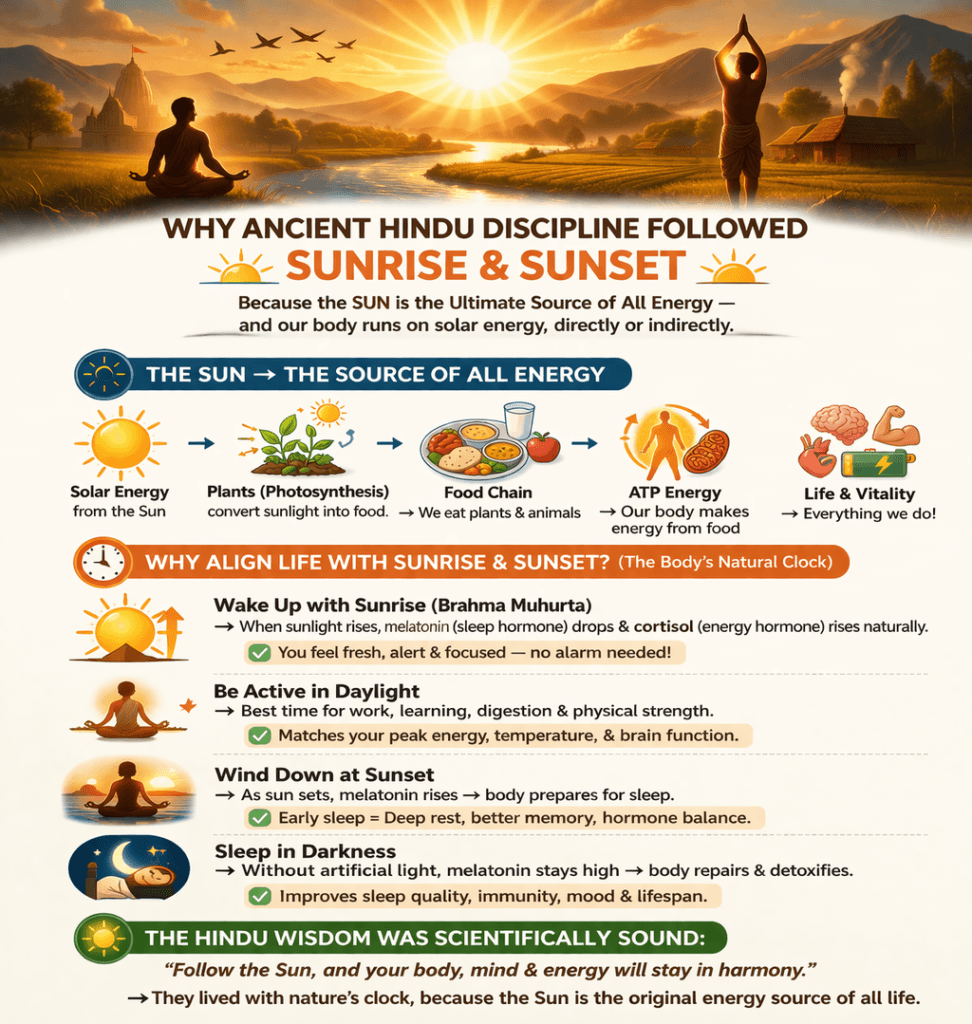
Sunlight study discipline for students
In today’s competitive world, students are constantly searching for better ways to improve focus, memory, and performance. While modern technology offers countless tools, one of the most powerful and time-tested methods is often overlooked—discipline based on sunlight. Ancient students, guided by traditional wisdom and Hindu philosophy, followed a lifestyle aligned with sunrise and sunset, allowing them to harness natural energy for learning and growth.
This was not just a ritual—it was a scientifically aligned routine that optimised brain function, physical health, and mental clarity. From early morning study sessions to balanced daily habits, this sunlight-based discipline helped students achieve excellence without burnout.
Traditional Lifestyle of Students
In this article, we explore how this ancient system works and how modern students, especially those preparing for tough science competitions, can adapt it for success.
काकचेष्टा बको ध्यानं श्वाननिद्रा तथैव च ।
अल्पहारी गृहत्यागी विद्यार्थी पंचलक्षणम् ॥
This śloka is not from a specific classical scripture like the Bhagavad Gita or the Vedas.
It is generally attributed to traditional Sanskrit subhāṣitas (नीतिश्लोक / moral verses), often linked loosely to the style of Chanakya (Chanakya Nīti), but no exact, authentic source text is confirmed.
But the above sloka means the student should have:
- the effort of a crow,
- the focus of a crane,
- the light sleep of a dog,
- eat little, and
- be detached from home (comforts) —
These are the five qualities of an ideal student.
Like a crow, be ever keen,
Like a crane, stay focused, serene.
Sleep lightly, like a dog at night,
Eat little, keep your habits right.
Leave home comforts, let learning be your quest,
These five traits make a student the best.
In short,
“Be eager like a crow, focused like a crane, sleep little, eat light, leave home comforts — the five marks of a true student.”
The śloka “काकचेष्टा बको ध्यानं श्वाननिद्रा तथैव च…” comes from the tradition of Hindu educational philosophy, particularly from the Gurukul system in ancient India. Its aim was to teach students not just academic learning, but also discipline, self-restraint, and a balanced lifestyle—the “five qualities” of an ideal student: effort, focus, light sleep, moderation in food, and detachment from comfort.
Shift of Lifestyle in the Modern Era
However, in modern times, even in Hindu families:
- Lifestyle Changes – Students now have access to smartphones, social media, and other distractions, which reduce focus and effort. They may not practice disciplined routines like waking up early, eating lightly, or limiting sleep.
- Shift in Educational Systems – Most students study in schools or online classes rather than Gurukuls. The emphasis is on grades and exams, not ritual or life discipline. So traditional values like self-restraint, detachment, or systematic study are often neglected.
- Ritual vs. Practicality – Many Hindu families may perform rituals, but the connection between rituals and daily discipline is not actively taught to children. Rituals are sometimes seen as symbolic, not as training for self-discipline or moral character.
- Cultural Dilution – Urbanisation, peer pressure, and global influences have made traditional practices less central to everyday life. Students may identify culturally as Hindu but do not follow the rigorous moral and practical disciplines that these ślokas advocate.
In short: The sloka was meant to guide students to excellence through discipline and self-control, but modern Hindu students often miss this link. They may retain the cultural identity without practising the ritual and lifestyle discipline the philosophy encourages, leading to students who are academically capable but lacking in self-regulation and holistic growth.
Why modern students should follow:
Here’s why students should follow the moral verse “काकचेष्टा बको ध्यानं श्वाननिद्रा….” even in the modern era, in clear points:
1. Develops Focus and Concentration
- Being focused like a crane helps students concentrate on studies despite distractions like social media or gaming.
- Enhances learning efficiency and retention of knowledge.
2. Builds Strong Work Ethic
- Effort like a crow teaches persistence and diligence.
- Encourages consistent practice rather than last-minute cramming.
3. Promotes a Healthy Lifestyle
- Sleeping lightly and eating moderately prevents lethargy, obesity, and health problems.
- Maintains energy levels for both study and physical activity.
4. Encourages Self-Discipline
- Detachment from home comforts fosters independence and responsibility.
- Prepares students to handle challenges in higher education and life.
5. Strengthens Character and Mental Resilience
- Following these traits builds patience, self-control, and mental toughness.
- Helps students face failure and competition with composure.
6. Balances Modern Learning with Timeless Wisdom
- Even with technology and modern education systems, these principles ensure holistic growth—academic, moral, and personal.
7. Cultivates Lifelong Habits
- Early practice of these qualities leads to habits that benefit career, relationships, and well-being in the long term.
Modern students strictly follow due to:
Here’s a balanced view: reasons why some might argue students may not strictly follow this moral verse in the modern era:
1. Modern Lifestyle Conflicts
- Students often have tight schedules, extracurriculars, and digital distractions, making strict adherence to light sleep, minimal food, or detachment from comforts difficult.
2. Different Educational Demands
- Modern education emphasises specialisation, teamwork, and technology skills over the solitary, disciplined routines suggested by the verse.
3. Health Considerations
- Following very light meals or minimal sleep as a rule may negatively affect health, especially for growing children or those with high study demands.</li>
4. Cultural and Social Differences
- The verse assumes a Gurukul-style lifestyle, which may be unrealistic for urban families, boarding schools, or digital learning setups.
5. Balance vs. Extremes
- Strictly following detachment from comforts or extreme diligence might lead to stress, isolation, or burnout in modern competitive environments.
6. Individual Needs Vary
- Modern pedagogy recognises that students have different learning styles, energy levels, and needs; a one-size-fits-all moral discipline may not suit everyone.
Powerful Daily Timetable based on Solar Energy
Here is a practical, powerful daily timetable based on sun energy + modern competition needs:
🌅 Early Morning (4:45 – 7:30 AM) – Peak Brain Power
- Wake up (Brahma Muhurta or near sunrise)
- 10–15 min fresh air/sunlight exposure
- Deep Study Session 1 (2–2.5 hrs)
- Physics numericals / Math problems / Chemistry concepts
- No phone, full concentration
👉 Reason: Brain is sharpest, distractions = zero
☀️ Morning (7:30 – 12:30 PM) – Learning Phase
- Breakfast (light but nutritious)
- School / Classes / Lectures
- Active learning (note-taking, concept clarity)
👉 Use sunlight hours for maximum absorption
🌞 Afternoon (1:00 – 4:00 PM) – Controlled Study
- Lunch (moderate, not heavy)
- Short rest (20–30 min max)
- Study Session 2 (1.5–2 hrs)
- Practice + revision
- Focus on weak areas
👉 Energy slightly lower → do practice, not new heavy topics
🌇 Evening (4:30 – 7:00 PM) – Recharge + Light Study
- Walk/exercise (important for brain performance)
- Study Session 3 (1.5–2 hrs)
- Light subjects/revision / MCQs
👉 Avoid burnout → balance energy
🌙 Night (7:30 – 10:30 PM) – Final Consolidation
- Light dinner
- Study Session 4 (1–1.5 hrs)
- Revision/formula recall / quick notes
- Sleep by 10–10:30 PM
👉 Sleep is critical for memory + performance
🔥 How This Follows Ancient Philosophy (Smart Way)
- काकचेष्टा (Effort): 6–8 hrs focused study
- बको ध्यान (Focus): Deep work in morning sessions
- श्वाननिद्रा (Alert sleep): Not excess sleep, but quality sleep</li>
- अल्पहारी (Light eating): No heavy food → better focus
- गृहत्यागी (Less comfort): Controlled distractions
⚡ Reality Check (Important)
- You don’t need to live like a Gurukul student
- You need discipline + smart adaptation
- Even toppers follow the sun-based rhythm indirectly
Golden Rule
“Study hardest when your energy is natural (morning), not artificial (late night).”
In the next blog post, Learn how aligning your routine with sunlight boosts focus, health, and academic success.
Conclusion (Powerful + Action-Oriented)
Success in studies is not just about how long you study, but how well you manage your energy. Ancient students understood a truth that modern science now confirms—the sun is the ultimate source of energy, and aligning our routine with it can unlock peak performance. By waking up early, studying during high-energy hours, eating moderately, and maintaining discipline, students can build a strong foundation for both academic success and personal growth.
You don’t need to abandon modern life to follow this system. Instead, adopt its core principle: work with natural energy, not against it. Even small changes—like starting your day with sunlight or prioritising morning study—can create a massive difference. The path from sunlight to success is simple, practical, and powerful—if you choose to follow it.