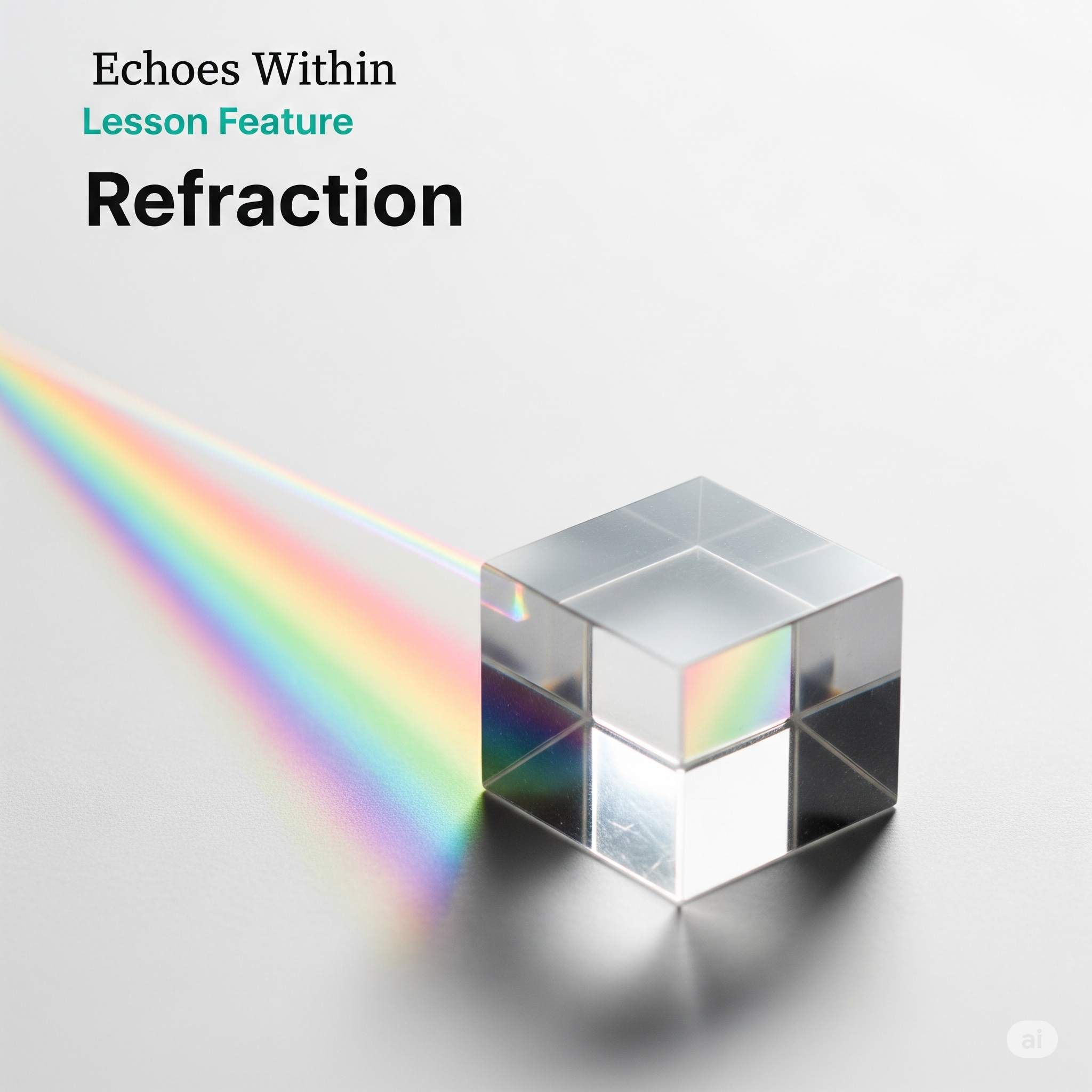
In Light: Part 1, here is a clear and concise summary note for the “Light 1. Reflection & 2. Refraction”, designed especially for SEE graduates preparing for the NEB Grade 11 Science entrance exam.
🔦 Summary Note: Light – 1. Reflection of Light
📘 Definition of Light:
Light is a form of energy that enables us to see objects. It travels in a straight line and does not require a medium for its propagation.
🔁 Reflection of Light:
Reflection is the bouncing back of light rays when they strike a smooth surface like a mirror.
🌟 Types of Reflection:
Regular Reflection:
Occurs on smooth, polished surfaces (e.g., mirror).
Produces clear images.
Irregular (Diffuse) Reflection:
Occurs on rough surfaces.
Scatters light in different directions.
No clear image is formed.
🔑 Laws of Reflection:
First Law:
The incident ray, reflected ray, and the normal at the point of incidence all lie in the same plane.Second Law:
The angle of incidence (i) is equal to the angle of reflection (r).
👉 i = r
🪞 Important Terms:
| Term | Description |
|---|---|
| Incident Ray | The ray of light falling on the surface |
| Reflected Ray | The ray of light bouncing back |
| Point of Incidence | The point where the incident ray strikes the surface |
| Normal | A perpendicular line drawn to the surface at the point of incidence |
| Angle of Incidence (i) | The angle between the incident ray and the normal |
| Angle of Reflection (r) | The angle between the reflected ray and the normal |
📌 Characteristics of Images Formed by Plane Mirror:
Always virtual and erect
Image size = Object size
The image is laterally inverted
The image appears to be as far behind the mirror as the object is in front
🔍 Applications of Reflection:
Mirrors (in vehicles, dressing rooms)
Periscopes and kaleidoscopes
Optical instruments like microscopes and telescopes
🌈 Summary Note: Light –2. Refraction of Light
📘 What is Refraction?
Refraction is the bending of light when it passes from one transparent medium to another with a different optical density (e.g., air to water).
🔑 Cause of Refraction:
Refraction occurs because light changes speed when moving between materials with different densities:
Light slows down when entering a denser medium (e.g., air → glass)
Light speeds up when entering a rarer medium (e.g., glass → air)
📐 Important Terms:
| Term | Definition |
|---|---|
| Incident Ray | A ray of light falling on the surface |
| Refracted Ray | Ray bending inside the second medium |
| Normal | Perpendicular to the surface at the point of incidence |
| Angle of Incidence (i) | Between the incident ray and the normal |
| Angle of Refraction (r) | Between the refracted ray and the normal |
| Optical Density | The ability of a medium to slow down light |
📏 Laws of Refraction:
The incident ray, the refracted ray, and the normal all lie in the same plane.
The ratio of the sine of the angle of incidence to the sine of the angle of refraction is constant:
👉 Snell’s Law:sini/sinr=μ
where μ is the refractive index of the second medium.
🧪 Refractive Index (μ):
It is a measure of how much a medium slows down the speed of light.
μ=Speed of light in vacuum (c)/Speed of light in medium(v)
🌟 Effects of Refraction:
A coin in water appears raised
A pencil appears bent in water
Objects in water appear closer than they are
Formation of rainbows, lens effects, and mirages
🔍 Rules to Remember:
Light bends towards the normal when entering a denser medium
Light bends away from the normal when entering a rarer medium
When light enters perpendicularly, it does not bend
🔬 Applications:
Lenses (in glasses, microscopes, cameras)
Optical fibers
Prisms
Corrective vision (eyeglasses)
🔍 You Can Also Read:
Light: Part 2
SEE Result: New Possibilities and Uncertainties for Students’ Future Careers in Nepal